
Built to specification · Wire Harnesses
Drone Wire Harnesses
Lightweight wiring for flight controllers, power distribution boards, gimbals, telemetry and payload modules — where every gram and every millimetre of routing matters.
AWG 32 – 12
Wire range
Weight-critical
Routing
Silicone or PTFE
Insulation
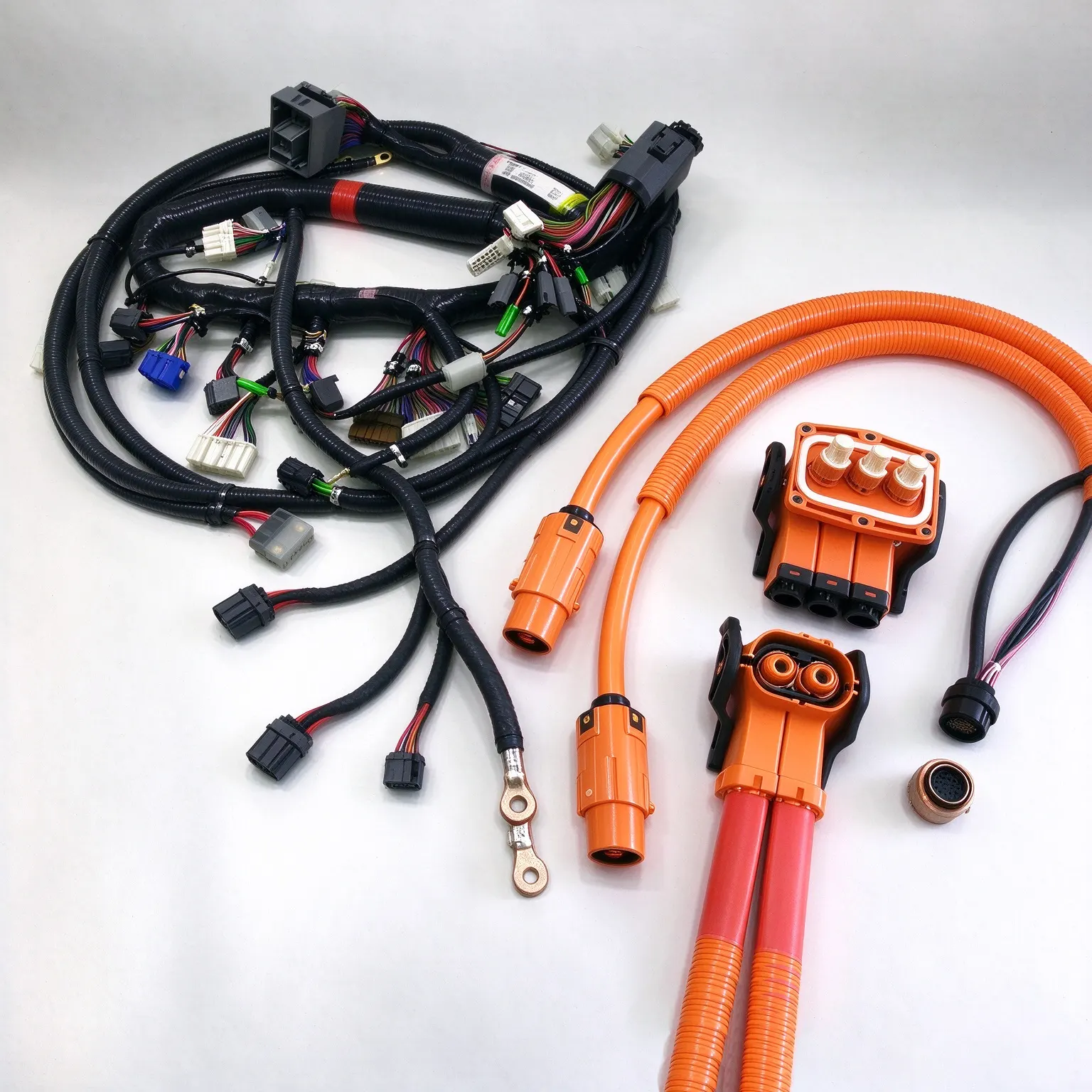
Explore drone harness areas.
A UAV build splits into power, flight control and payload. Each has a different constraint driving the assembly.
UAV harnesses fail for mechanical reasons more often than electrical ones: a wire that rubs through a carbon frame edge, a connector that works loose under vibration, a solder joint that cracks at a rigid transition.
High current in a small volume — conductor size, connector rating and heat are the limits.
Battery to PDB leads
Short, heavy-gauge leads with the connector system the pack uses, kept as short as the frame allows.
ESC and motor phases
Three-phase leads sized for the continuous current, with phase order marked for assembly.
BEC and regulator feeds
Reduced-gauge taps to the low-voltage rails, fused or protected as the design requires.
Airworthiness, RF compliance and flight-safety validation stay with the airframe integrator. Harnk builds and inspects to the supplied drawing.
What a drone harness quotation needs
UAV projects are weight- and space-constrained, so the mechanical envelope is as important as the electrical one.
Airframe layout
Where each component sits and the routing path available between them.
Connector schedule
Part numbers for the flight controller, PDB, ESC and payload interfaces.
Current and voltage
Continuous and peak current on each power path, plus the signal types.
Weight target
Any mass budget for the harness that constrains gauge and connector choice.
Moving sections
Which runs articulate, and the expected articulation range.
Quantity
Prototype count and expected build rate, since small volumes change the material options.
A frame drawing or even a photo with dimensions is usually enough to start — the routing path can be agreed before the harness drawing exists. See the robot harness page
Different circuits. Different checks.
A motor phase lead and a compass lead are not built the same way. Match the construction to the circuit, then confirm the weight and routing.
High-current power paths
Check conductor cross-section against continuous and peak current, connector rating, and heat build-up in a confined frame.
Low-level signal paths
Check shielding, twist, separation from the power stage and the ground reference at both ends.
Moving and articulated runs
Confirm flex rating, bend radius at the gimbal joint and strain relief before the cable leaves the frame.
Vibration and abrasion
Review fixing points, edge protection where the harness crosses a frame, and connector retention under continuous vibration.
How the build is controlled
The same process controls run on every build, whether it is a prototype run or a repeat order.
IQC incoming control
Dedicated IQC staff inspect incoming materials and retain inspection records.
In-process inspection
First-article confirmation, patrol inspection, and SPC process monitoring.
MES traceability
MES covers the entire process flow, so any anomaly is located and handled fast.
8D closed-loop response
Agreed response times and internal escalation paths — clear ownership, fast resolution.
- Locked process parameters
- Crimping, soldering, molding and waterproofing run on locked parameters with defined acceptance criteria.
- Outgoing control
- OQC inspection and mix-prevention packaging standards control outbound quality.
- Compliance documents
- Certifications and test reports available on demand for compliance audits.
- Factory visits
- Book a tour and walk the production floor along our visitor route.
Where to go next
Robot Wiring Harnesses
Harnesses that follow the arm: controller links, dress packs, joint runs and end-effector wiring, where continuous motion decides the construction.
ReadIndustrial Machinery Wire Harnesses
Machine-internal and panel wiring built from the equipment drawing — the highest-volume custom harness category, and the one where documentation quality decides the result.
ReadHome Appliance Wire Harnesses
Internal wiring for household appliances, where the enclosure geometry, the thermal environment and the component approvals decide the assembly.
ReadMotorcycle Wire Harnesses
Main looms and auxiliary assemblies for motorcycles and powersports vehicles, where vibration, water and heat from the engine define the construction.
ReadCustom wire harness services
Configurations, customization options, assembly process and quality checks.
ReadAll applications
Wiring requirements by equipment type: industrial, automation, automotive and medical.
ReadQuestions that come up before ordering
01 How is weight kept down without losing current capacity? Design
By sizing each conductor to the current it actually carries rather than to a single house gauge, and by routing to the shortest path the structure allows. Both are decisions on the drawing, not at the bench.
02 Which insulation is used on a drone harness? Material
Silicone where flexibility and heat resistance matter at the power runs, PTFE where the bundle is tight and abrasion is the concern. The choice is made per run, not per harness.
03 Can the harness be built to an existing airframe drawing? Process
Yes. The build follows the drawing and the connector schedule supplied, and open points are confirmed before the first article rather than during the run.
04 What is supplied with each batch? Documentation
Continuity and pinout are checked against the drawing, and the inspection record for the run can be issued with the shipment on request.
Planning Drone Wire Harnesses?
Send the drawing, the connector schedule or a photo of the existing assembly. We review what you have and come back with the open points and a quotation path.