
Specified to your build · Terminals
Butt Splices
A permanent inline joint between two conductors, where the connection does not have to come apart again.
26 – 8 AWG
Wire range
3
Insulation types
Two
Crimps per joint
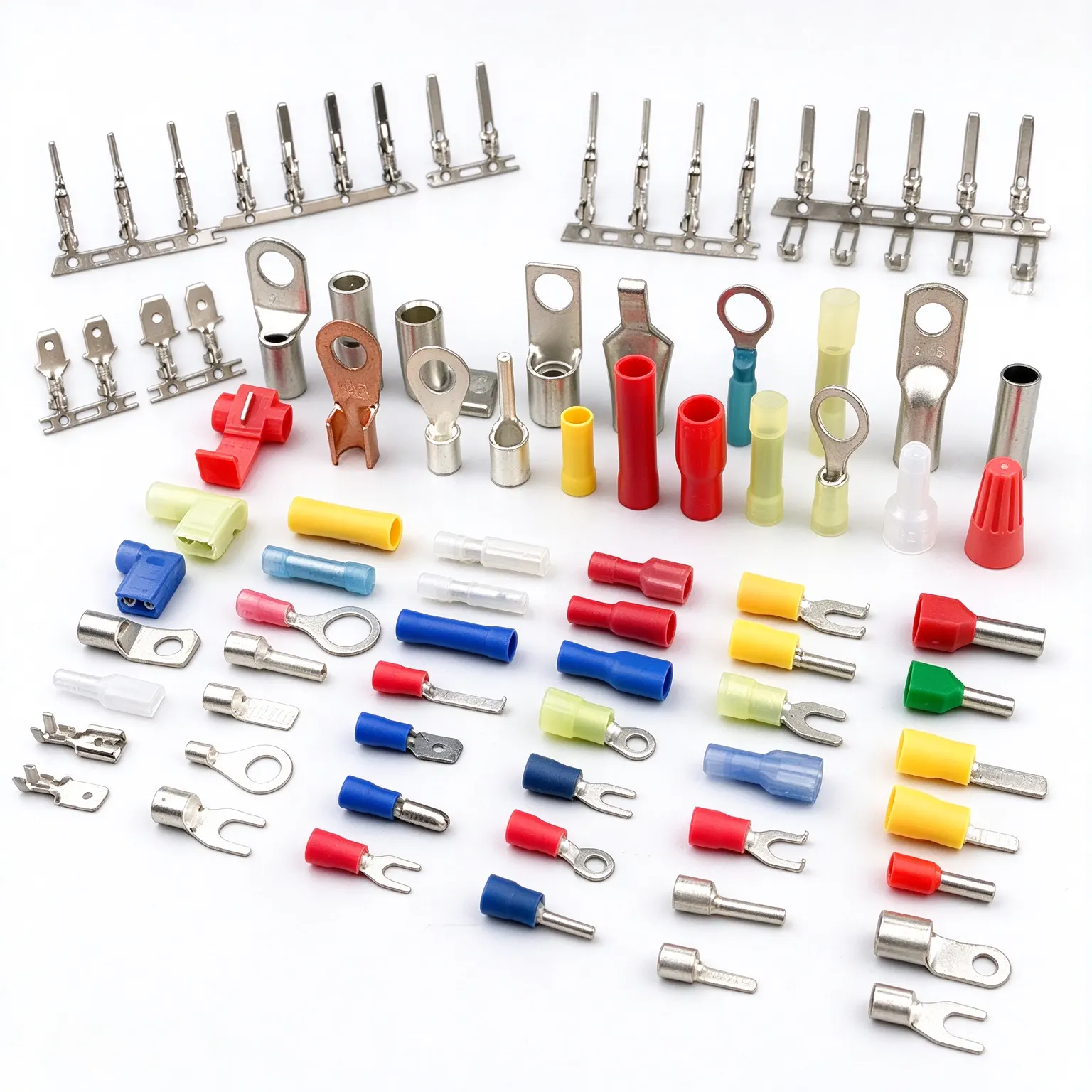
Range and variants
A splice is the cheapest way to join two wires and the hardest joint to inspect. The crimp has to be right the first time, because there is no second look once the insulation is closed over it.
Vinyl insulated
Colour-coded by wire range, the general-purpose choice.
Heat-shrink sealed
Adhesive lining that seals the joint against moisture.
Uninsulated
For high temperature, or where sleeving is added afterwards.
What has to be specified
The values that decide whether the part fits, before price or lead time are discussed.
- Wire range
- 26 to 8 AWG, one range per splice.
- Insulation
- Uninsulated, vinyl insulated, or heat-shrink sealed.
- Barrel
- Butted seam or seamless, depending on series.
- Crimp
- Two crimps, one per conductor, with the specified tool.
- Sealing
- Adhesive-lined heat-shrink versions for wet locations.
How the build is controlled
The same process controls run on every build, whether it is a prototype run or a repeat order.
IQC incoming control
Dedicated IQC staff inspect incoming materials and retain inspection records.
In-process inspection
First-article confirmation, patrol inspection, and SPC process monitoring.
MES traceability
MES covers the entire process flow, so any anomaly is located and handled fast.
8D closed-loop response
Agreed response times and internal escalation paths — clear ownership, fast resolution.
- Locked process parameters
- Crimping, soldering, molding and waterproofing run on locked parameters with defined acceptance criteria.
- Outgoing control
- OQC inspection and mix-prevention packaging standards control outbound quality.
- Compliance documents
- Certifications and test reports available on demand for compliance audits.
- Factory visits
- Book a tour and walk the production floor along our visitor route.
Where this is used
Harness repairs
Restoring a cut or damaged conductor in the middle of a run.
Extending a conductor
Adding length where a connector would be oversized for the circuit.
Prototype and one-off builds
Joints that will not be repeated in production.
Questions that come up before ordering
01 Why is a splice the hardest joint to inspect? Quality
Because the insulation closes over it. The crimp has to be right the first time, and the only check left is a pull test on a sample.
02 Heat-shrink or vinyl? Selection
Vinyl for dry locations and general repair. Adhesive-lined heat-shrink where the joint sits in a wet or vibrating area, because it seals as well as insulates.
03 Can a splice be used in a production harness? Specification
Yes, where the drawing allows it. Many drawings do not, because a splice cannot be reworked and it adds a failure point a connector does not have.
04 Does the splice need a specific tool? Tooling
Yes, and a two-crimp tool for the two conductors. A single squeeze with a generic tool leaves one side under-crimped, which is invisible under the insulation.
Need butt splices specified to your build?
Send the drawing, the environment and the interface. We confirm the open points before quoting, so the part you receive is the part that was specified.
- Drawing review before quote
- Prototype to volume
- Certifications on request