
Specified to your build · Terminals
Fork & Spade Terminals
Open terminals for a screw connection, so the joint can be added or removed without taking the screw all the way out.
M3 – M8
Stud sizes
22 – 10 AWG
Wire range
Locking / open
Fork types
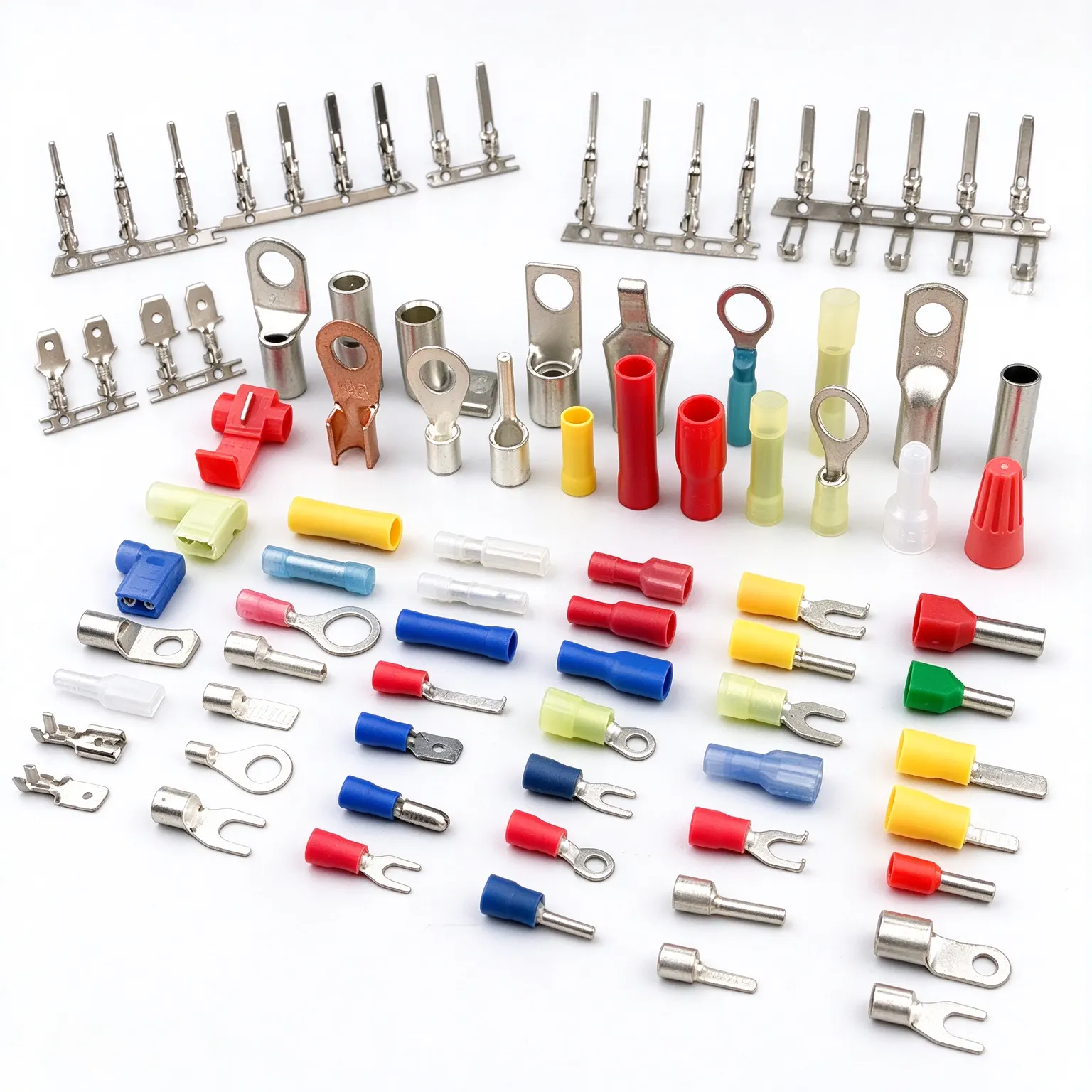
Range and variants
The fork is a compromise: faster to install than a ring, but it can be pulled off if the screw loosens. Where vibration is present, a ring or a locking fork is the safer choice, and the difference is visible in the terminal shape.
Locking fork
The bent leg closes over the screw so the terminal cannot slide out.
Flanged spade
A wider contact area for a connection without a washer.
Insulated fork
Colour-coded, for touch-safe panel wiring.
What has to be specified
The values that decide whether the part fits, before price or lead time are discussed.
- Stud size
- M3 to M8, with narrow and wide fork openings.
- Wire range
- 22 to 10 AWG.
- Insulation
- Bare, or vinyl / nylon insulated.
- Fork type
- Locking fork with a bent leg, or straight open fork.
- Plating
- Electro-tin standard.
How the build is controlled
The same process controls run on every build, whether it is a prototype run or a repeat order.
IQC incoming control
Dedicated IQC staff inspect incoming materials and retain inspection records.
In-process inspection
First-article confirmation, patrol inspection, and SPC process monitoring.
MES traceability
MES covers the entire process flow, so any anomaly is located and handled fast.
8D closed-loop response
Agreed response times and internal escalation paths — clear ownership, fast resolution.
- Locked process parameters
- Crimping, soldering, molding and waterproofing run on locked parameters with defined acceptance criteria.
- Outgoing control
- OQC inspection and mix-prevention packaging standards control outbound quality.
- Compliance documents
- Certifications and test reports available on demand for compliance audits.
- Factory visits
- Book a tour and walk the production floor along our visitor route.
Where this is used
Serviceable panel connections
Terminals added to an existing stud without dismantling the assembly.
Appliance and control wiring
Where the screw is captive and the terminal slides in from the side.
Test and temporary connections
Joints that are opened more often than they are tightened.
Questions that come up before ordering
01 When is a fork acceptable over a ring? Selection
Where the screw is captive and the joint is opened for service more often than it is tightened. Under sustained vibration, a ring or a locking fork is the safer choice.
02 What does a locking fork do? Retention
The bent leg closes over the screw, so the terminal cannot slide out even if the screw loosens. It is the only fork type that keeps the joint captive.
03 Narrow or wide fork? Selection
Wide where the stud has no washer and the contact area matters. Narrow where several terminals share one stud and space is tight.
04 Can a fork be used on a busbar? Application
Yes, if the stud is accessible from the side. Where the joint has to be fully enclosed, a ring is the correct part.
Need fork & spade terminals specified to your build?
Send the drawing, the environment and the interface. We confirm the open points before quoting, so the part you receive is the part that was specified.
- Drawing review before quote
- Prototype to volume
- Certifications on request