
Specified to your build · Connectors
Wire-to-Wire Connectors
Inline connections inside a harness or between two harness sections, where the housing replaces a splice.
1.5 – 6.35 mm
Pitch range
1 – 15
Positions
IP67
On sealed systems
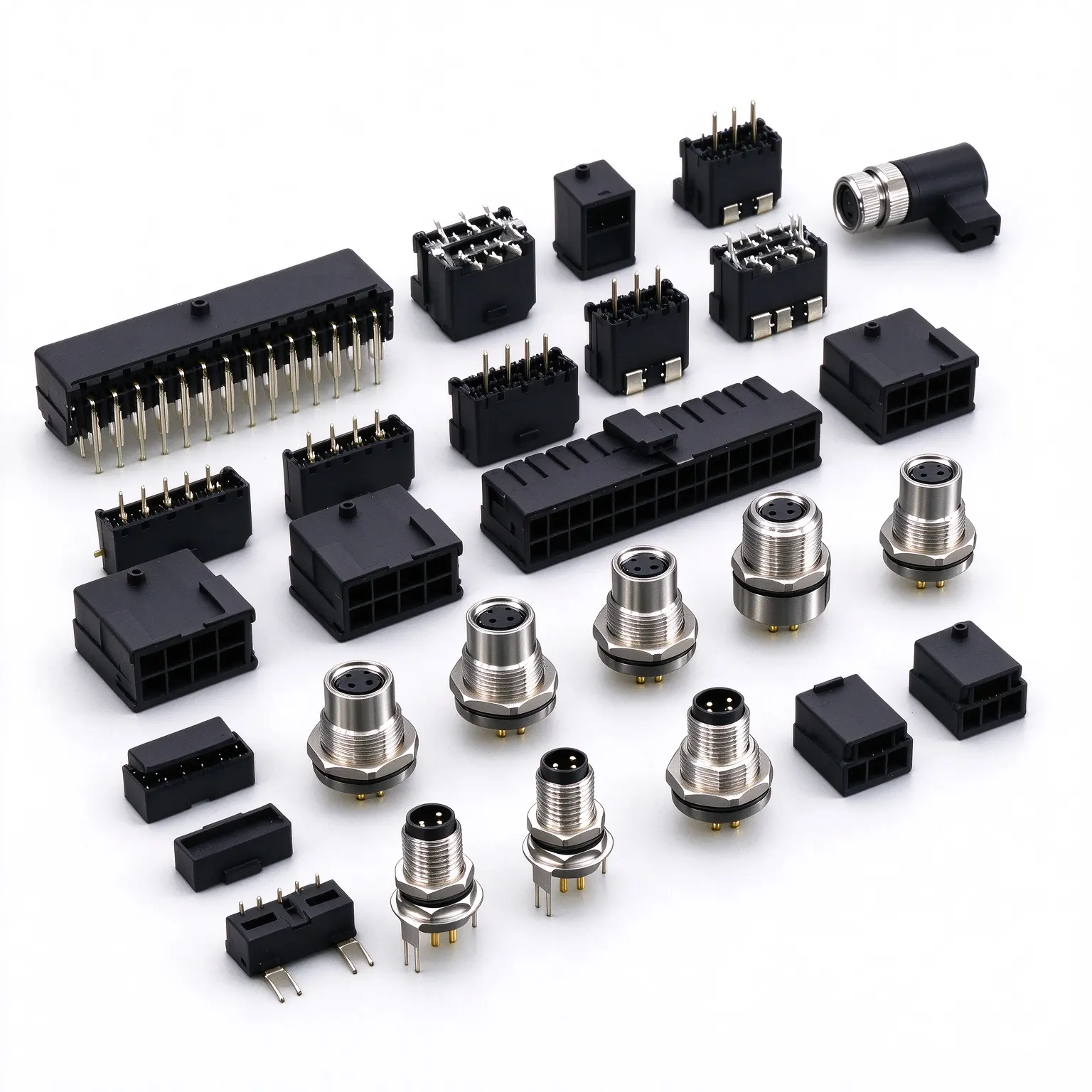
Range and variants
A wire-to-wire connector is chosen when the joint has to come apart again — during installation, during service, or because two sub-assemblies are built in different cells and mated at final assembly.
Sealed inline systems
Grommet and mat seal versions for engine, outdoor and washdown wiring.
Multi-row housings
Two and three row versions once the position count outgrows a single row.
Panel-mount receptacles
Where the joint passes through a bulkhead and the shell carries the seal.
What has to be specified
The values that decide whether the part fits, before price or lead time are discussed.
- Pitch
- 1.5 to 6.35 mm depending on family.
- Positions
- 1 to 15 positions, multi-row on larger shells.
- Sealing
- Unsealed inside enclosures, IP67 systems for exposed runs.
- Retention
- Positive latch, CPA and secondary lock.
- Wire range
- 22 to 14 AWG, set by the terminal series.
How the build is controlled
The same process controls run on every build, whether it is a prototype run or a repeat order.
IQC incoming control
Dedicated IQC staff inspect incoming materials and retain inspection records.
In-process inspection
First-article confirmation, patrol inspection, and SPC process monitoring.
MES traceability
MES covers the entire process flow, so any anomaly is located and handled fast.
8D closed-loop response
Agreed response times and internal escalation paths — clear ownership, fast resolution.
- Locked process parameters
- Crimping, soldering, molding and waterproofing run on locked parameters with defined acceptance criteria.
- Outgoing control
- OQC inspection and mix-prevention packaging standards control outbound quality.
- Compliance documents
- Certifications and test reports available on demand for compliance audits.
- Factory visits
- Book a tour and walk the production floor along our visitor route.
Where this is used
Harness-to-harness joints
Two assemblies built separately and mated on the line, without a splice in the run.
Serviceable inline connections
Where a component has to be replaced without cutting the harness open.
Extensions and adapters
Adding length to a standard cordset without a second joint.
Where to go next
Questions that come up before ordering
01 When is a connector better than a splice? Selection
When the joint has to open again — for service, for installation, or because two sub-assemblies are built in different cells. A splice is cheaper and permanent; a connector is serviceable and costs more.
02 Do I need a sealed inline connector inside a cabinet? Sealing
No. Sealing adds cost and insertion force, and inside a dry enclosure it buys nothing. Sealed systems belong on runs that leave the cabinet.
03 What does CPA actually do? Retention
It locks the latch in place after mating, so vibration cannot walk the connector apart. It is a second lock, not a replacement for the first one.
04 Can two housings from the same series mate? Compatibility
Only if they share the position count and keying. Same series does not mean same cavity layout, and a wrong pair will either not mate or mate with the circuits crossed.
Need wire-to-wire connectors specified to your build?
Send the drawing, the environment and the interface. We confirm the open points before quoting, so the part you receive is the part that was specified.
- Drawing review before quote
- Prototype to volume
- Certifications on request