
Specified to your build · Terminals
Pin Terminals
A solid pin on the end of a stranded conductor, so the wire enters a clamp or spring terminal without the strands spreading.
8 – 18 mm
Pin length
22 – 10 AWG
Wire range
Square / round
Pin shapes
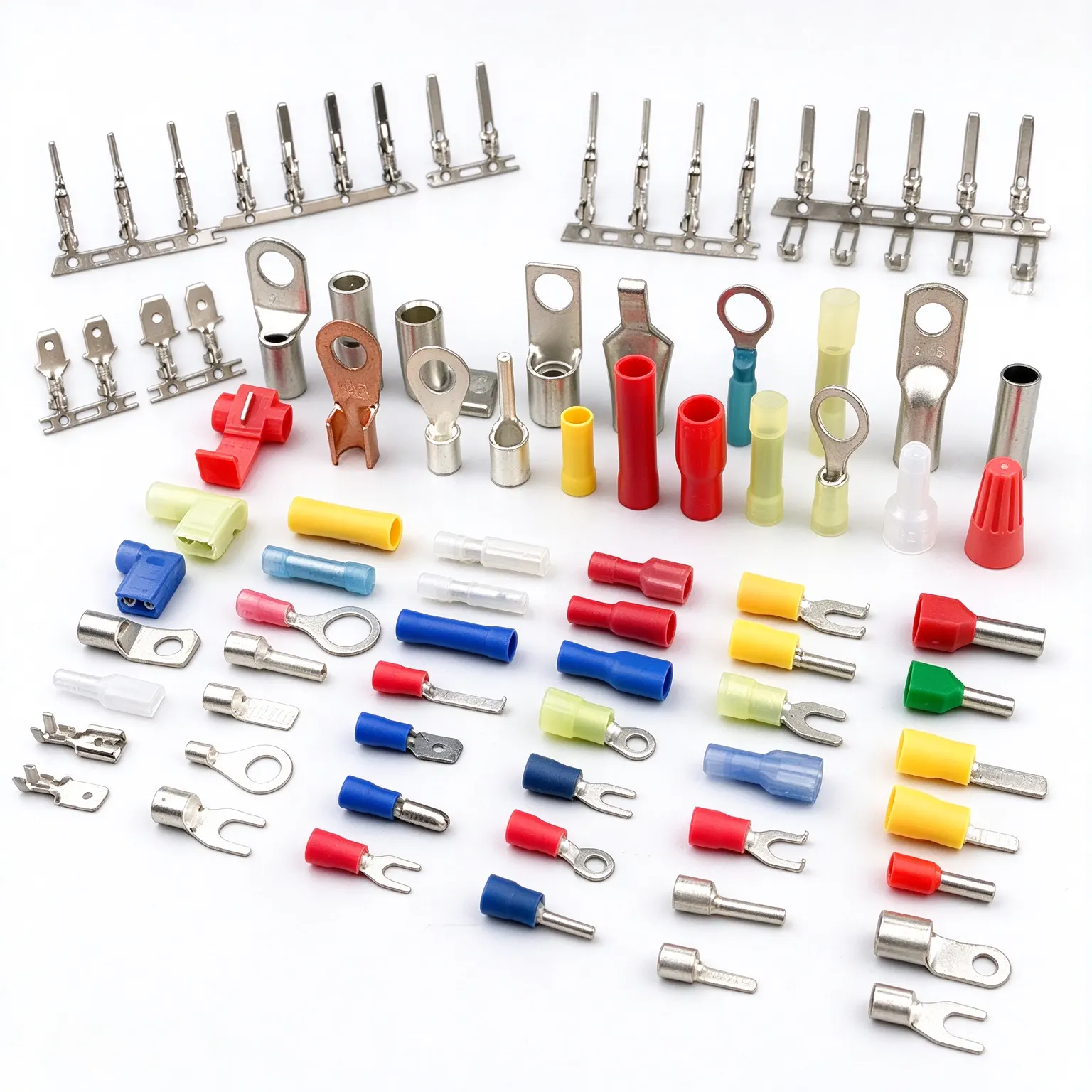
Range and variants
Pin terminals and ferrules solve the same problem in two different ways: the pin presents a defined shape to the clamp, the ferrule consolidates the strands. Which one is correct depends on the terminal block, not on preference.
Insulated pin
Colour-coded and touch-safe, the common panel choice.
Twin pin
Two conductors into one terminal block position.
Long pin
For deep clamps and for test points that are probed in service.
What has to be specified
The values that decide whether the part fits, before price or lead time are discussed.
- Pin length
- From 8 mm to 18 mm, matched to the clamp depth.
- Wire range
- 22 to 10 AWG.
- Insulation
- Bare, or insulated with a colour code.
- Pin shape
- Square and round pins, by terminal block type.
- Plating
- Electro-tin standard.
How the build is controlled
The same process controls run on every build, whether it is a prototype run or a repeat order.
IQC incoming control
Dedicated IQC staff inspect incoming materials and retain inspection records.
In-process inspection
First-article confirmation, patrol inspection, and SPC process monitoring.
MES traceability
MES covers the entire process flow, so any anomaly is located and handled fast.
8D closed-loop response
Agreed response times and internal escalation paths — clear ownership, fast resolution.
- Locked process parameters
- Crimping, soldering, molding and waterproofing run on locked parameters with defined acceptance criteria.
- Outgoing control
- OQC inspection and mix-prevention packaging standards control outbound quality.
- Compliance documents
- Certifications and test reports available on demand for compliance audits.
- Factory visits
- Book a tour and walk the production floor along our visitor route.
Where this is used
Spring and push-in terminal blocks
Where the clamp expects a solid, defined end rather than bare strands.
Repeated re-termination
Joints opened and closed during commissioning and service.
Fine-strand conductors
Where the strands would otherwise fold back inside the clamp.
Questions that come up before ordering
01 Pin terminal or ferrule? Selection
It depends on the terminal block. A clamp that expects a defined pin needs a pin terminal; a block that specifies a ferrule needs a ferrule. The block, not preference, decides.
02 What sets pin length? Specification
The clamp depth. A pin shorter than the clamp does not seat; a pin longer than the clamp leaves exposed metal in the block.
03 Why a square pin? Selection
A square pin presents a flat face to the clamp, which suits some block designs better than a round pin. The block datasheet says which.
04 Can two wires go into one position? Application
With a twin pin, yes. Otherwise a twin-entry ferrule is the other way to do it.
Need pin terminals specified to your build?
Send the drawing, the environment and the interface. We confirm the open points before quoting, so the part you receive is the part that was specified.
- Drawing review before quote
- Prototype to volume
- Certifications on request