
Specified to your build · Connectors
Wire-to-Board Connectors
The interface between a cable and a PCB, where pitch and retention decide everything else.
0.5 – 3 A
Current per contact
1.0 – 2.54 mm
Pitch families
2 – 20
Positions per housing
Range and variants
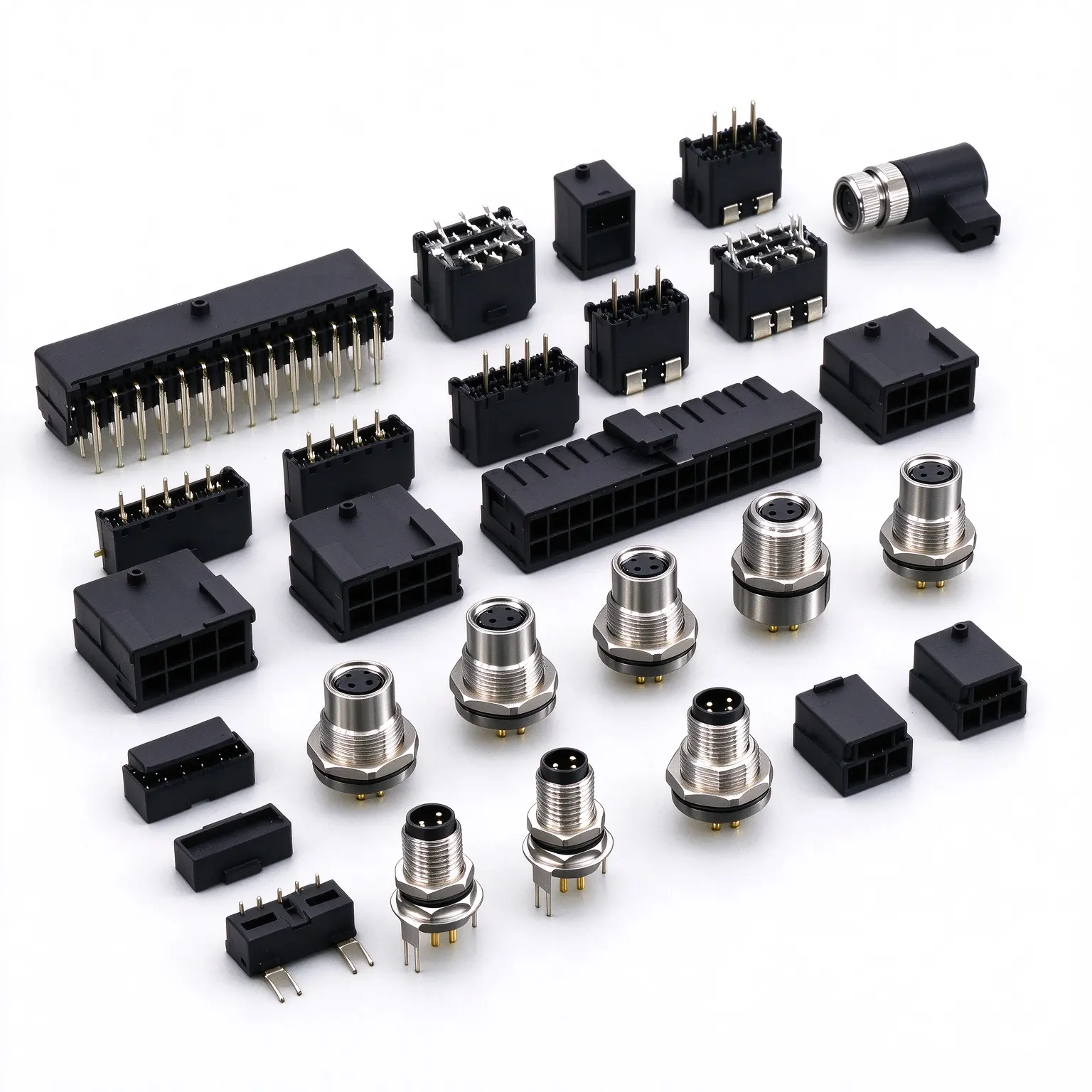
Pitch sets the connector family, the housing sets the terminal, and the header sets the board footprint. Changing any one of them after the PCB is laid out usually means a new board, so this is the earliest decision in a harness project.
Shrouded headers
A wall on four sides, protecting the pins and keying the housing.
IDC mass termination
Ribbon cable terminated in one press, for flat-cable runs.
Board-in and crimp style
Housings that accept a bare wire directly, without a separate crimped contact.
What has to be specified
The values that decide whether the part fits, before price or lead time are discussed.
- Pitch
- 1.0, 1.25, 1.5, 2.0, 2.5 and 2.54 mm families.
- Current per contact
- From 0.5 A at 1.0 mm pitch up to 3 A at 2.54 mm.
- Positions
- 2 to 20 positions in most families, more on request.
- Mounting
- Through-hole, SMD and right-angle headers.
- Retention
- Friction lock, positive latch and TPA options.
How the build is controlled
The same process controls run on every build, whether it is a prototype run or a repeat order.
IQC incoming control
Dedicated IQC staff inspect incoming materials and retain inspection records.
In-process inspection
First-article confirmation, patrol inspection, and SPC process monitoring.
MES traceability
MES covers the entire process flow, so any anomaly is located and handled fast.
8D closed-loop response
Agreed response times and internal escalation paths — clear ownership, fast resolution.
- Locked process parameters
- Crimping, soldering, molding and waterproofing run on locked parameters with defined acceptance criteria.
- Outgoing control
- OQC inspection and mix-prevention packaging standards control outbound quality.
- Compliance documents
- Certifications and test reports available on demand for compliance audits.
- Factory visits
- Book a tour and walk the production floor along our visitor route.
Where this is used
Internal board links
Signal and low-power runs between a main board and a daughter board.
Panel and display wiring
Where a cable leaves the enclosure and the board end still has to come apart for service.
Volume harnesses
Crimp housings that are terminated on automatic machines rather than by hand.
Questions that come up before ordering
01 Does pitch decide the current rating? Selection
Mostly. A 1.0 mm family is built around 0.5 A contacts and a 2.54 mm family around 3 A. You can sometimes run more current through a larger pitch than its rating, but not the other way round.
02 What is the difference between a header and a housing? Terminology
The header is soldered to the board and presents pins; the housing holds crimped contacts and plugs onto it. They have to come from the same series, not just the same pitch.
03 When do I need a positive latch? Retention
Whenever the joint sees vibration or the harness is pulled during service. Friction lock is enough inside a cabinet; a latch or TPA is what keeps a field connector seated.
04 Can you terminate a housing by hand? Assembly
Yes, for prototypes and small runs. Volume builds use applicators, because a hand crimp varies with the operator and that variation shows up later as a loose contact.
Need wire-to-board connectors specified to your build?
Send the drawing, the environment and the interface. We confirm the open points before quoting, so the part you receive is the part that was specified.
- Drawing review before quote
- Prototype to volume
- Certifications on request