
Specified to your build · Connectors
Contacts, Seals & Accessories
The parts that turn a housing into a working connection — contacts, seals and the small hardware that is easiest to leave off the BOM.
32 – 8 AWG
Wire range
Stamped / machined
Contact types
Tin – gold
Plating options
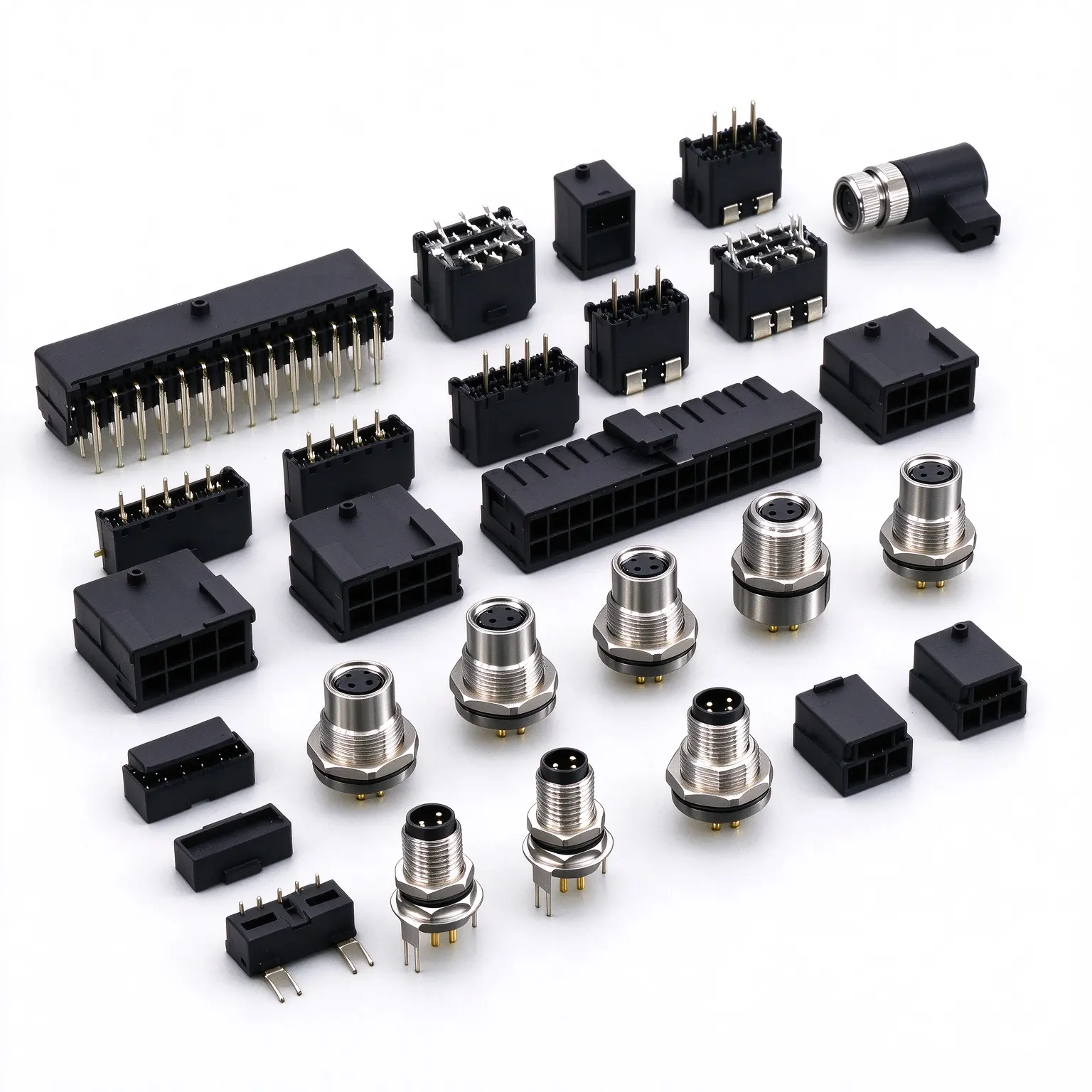
Range and variants
A housing on its own does nothing. The contact sets the wire range, the seal sets the IP rating, and the retention clip keeps the contact from backing out under vibration. Each is ordered against the housing series, not by size.
Stamped and formed
Lower cost at volume, one wire range per contact.
Machined contacts
Higher current and more mating cycles, with tighter tolerances.
Sealed contact systems
Contacts with an integrated wire seal for housings without a grommet.
What has to be specified
The values that decide whether the part fits, before price or lead time are discussed.
- Contact type
- Crimp, solder and PCB contacts by housing series.
- Wire range
- 32 to 8 AWG depending on the contact.
- Plating
- Tin, gold flash and selective gold on the contact area.
- Seals
- Single-wire seals, mat seals and cavity plugs.
- Tooling
- Hand crimp tools and applicators matched to the contact.
How the build is controlled
The same process controls run on every build, whether it is a prototype run or a repeat order.
IQC incoming control
Dedicated IQC staff inspect incoming materials and retain inspection records.
In-process inspection
First-article confirmation, patrol inspection, and SPC process monitoring.
MES traceability
MES covers the entire process flow, so any anomaly is located and handled fast.
8D closed-loop response
Agreed response times and internal escalation paths — clear ownership, fast resolution.
- Locked process parameters
- Crimping, soldering, molding and waterproofing run on locked parameters with defined acceptance criteria.
- Outgoing control
- OQC inspection and mix-prevention packaging standards control outbound quality.
- Compliance documents
- Certifications and test reports available on demand for compliance audits.
- Factory visits
- Book a tour and walk the production floor along our visitor route.
Where this is used
Building a connector from parts
Housing, contacts and seals specified as separate line items on the drawing.
Repair and rework
Replacing a damaged contact or a cut seal without changing the housing.
Completing a sealed system
Cavity plugs and wire seals for the positions that stay empty.
Questions that come up before ordering
01 Stamped or machined contacts? Selection
Stamped and formed for volume and one wire range per contact. Machined where the current is higher, the mating cycles are many, or the tolerance has to be tighter.
02 Can I use a contact from another series? Compatibility
No. The contact is dimensioned to the housing cavity and to the latch that holds it. A contact that fits but does not latch will back out under vibration.
03 Why are cavity plugs a separate part? Sealing
Because the housing is moulded with every cavity open. Sealing is completed at assembly, position by position, and the plug is what closes the ones that stay empty.
04 Do I need a specific crimp tool? Tooling
Yes. The crimp height is set by the tool and the contact, and a generic tool will not produce the pull-out value the contact is rated for.
Need contacts, seals & accessories specified to your build?
Send the drawing, the environment and the interface. We confirm the open points before quoting, so the part you receive is the part that was specified.
- Drawing review before quote
- Prototype to volume
- Certifications on request