
Specified to your build · Connectors
Automotive Connectors
Housings built to vehicle practice, where the connector is specified by the harness drawing rather than picked from a catalogue.
22 – 8 AWG
Wire range
IP67 – IP6K9K
Sealed series
-40 to 125 °C
Temperature
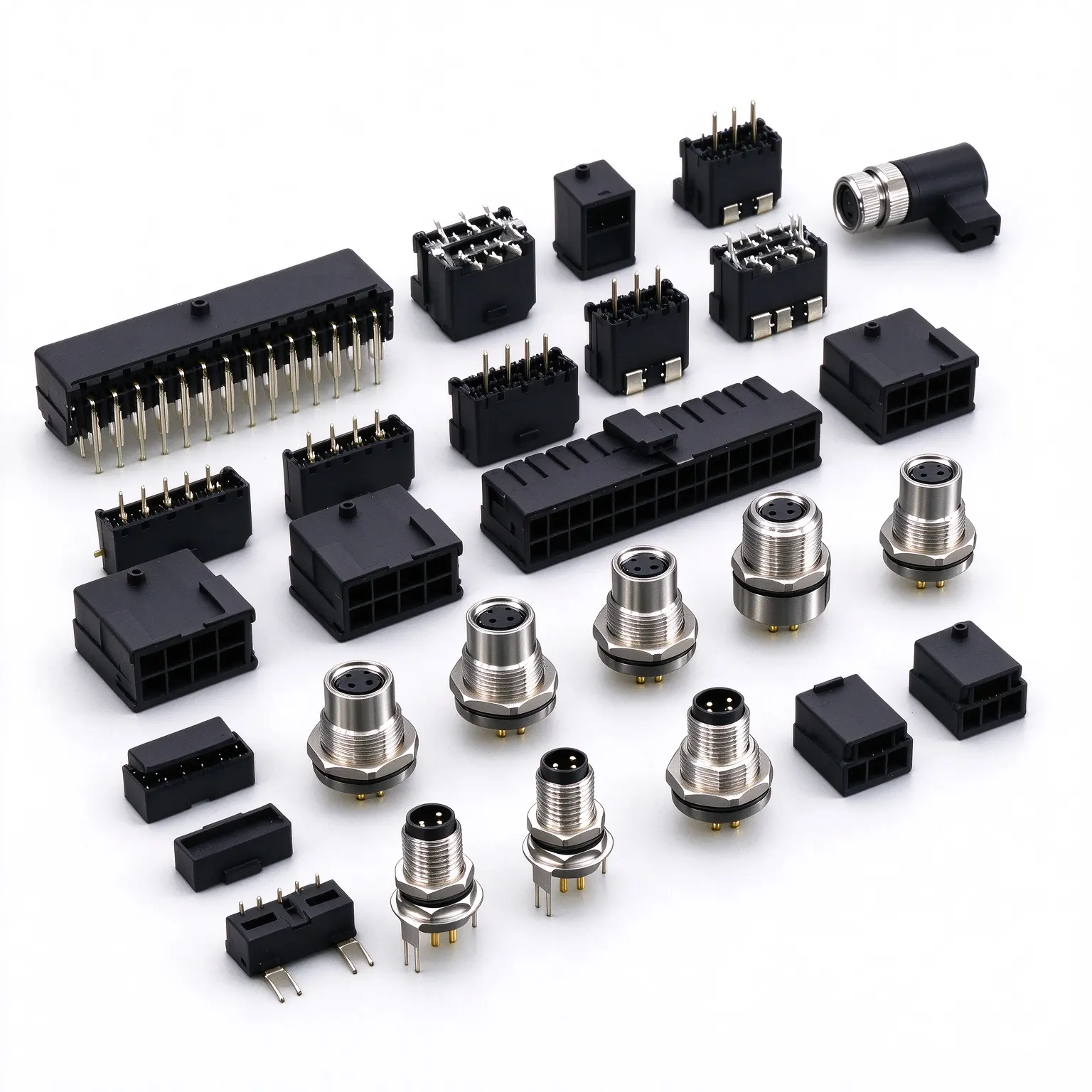
Range and variants
Automotive connectors add two things to a sealed housing: a connector position assurance that locks the latch, and a terminal position assurance that stops a half-seated contact from being missed during assembly. Both are checked by the harness test, not by eye.
Sealed series
Grommet and mat seals for engine-side and underbody use.
Unsealed series
Cabin and body wiring, with a latch but no seal system.
High-voltage
Keyed and interlocked shells for battery, inverter and charger circuits.
What has to be specified
The values that decide whether the part fits, before price or lead time are discussed.
- Positions
- 1 to 20 cavities, mixed sizes on hybrid shells.
- Sealing
- IP67 to IP6K9K on sealed series.
- Wire range
- 22 to 8 AWG depending on the terminal.
- Retention
- Latch, CPA and TPA as standard on sealed series.
- Temperature
- -40 to 125 °C on most sealed series.
How the build is controlled
The same process controls run on every build, whether it is a prototype run or a repeat order.
IQC incoming control
Dedicated IQC staff inspect incoming materials and retain inspection records.
In-process inspection
First-article confirmation, patrol inspection, and SPC process monitoring.
MES traceability
MES covers the entire process flow, so any anomaly is located and handled fast.
8D closed-loop response
Agreed response times and internal escalation paths — clear ownership, fast resolution.
- Locked process parameters
- Crimping, soldering, molding and waterproofing run on locked parameters with defined acceptance criteria.
- Outgoing control
- OQC inspection and mix-prevention packaging standards control outbound quality.
- Compliance documents
- Certifications and test reports available on demand for compliance audits.
- Factory visits
- Book a tour and walk the production floor along our visitor route.
Where this is used
Engine and chassis harnesses
Sealed housings on the hot and wet side of the firewall.
Cabin and body wiring
Unsealed or lightly sealed housings where the environment is controlled.
EV and battery packs
High-voltage and signal connectors with interlock circuits.
Where to go next
Questions that come up before ordering
01 What is the difference between CPA and TPA? Retention
CPA locks the connector latch after mating. TPA pushes into the housing and stops a half-seated contact from being missed. One protects the joint, the other protects the assembly step.
02 Why is the connector specified by drawing rather than catalogue? Specification
Because the harness drawing fixes the cavity layout, the wire colours and the branch lengths. The connector follows the drawing; it is not picked from a list and adapted afterwards.
03 Can a sealed connector be used unsealed? Selection
You can leave the seals out, but you lose the rating and gain nothing, because the housing costs the same. Use an unsealed series where the environment is dry.
04 What does IP6K9K add over IP67? Sealing
High-pressure, high-temperature steam cleaning. IP67 is immersion; IP6K9K is a close-range jet, which is what engine-bay washdown actually is.
Need automotive connectors specified to your build?
Send the drawing, the environment and the interface. We confirm the open points before quoting, so the part you receive is the part that was specified.
- Drawing review before quote
- Prototype to volume
- Certifications on request