
Specified to your build · Cable Accessories
Cable Glands
The entry point where a cable passes through an enclosure wall, and the only place where the enclosure rating can be lost without anyone noticing.
M12 – M63
Thread sizes
3 – 44 mm
Clamping range
IP68
Sealed versions
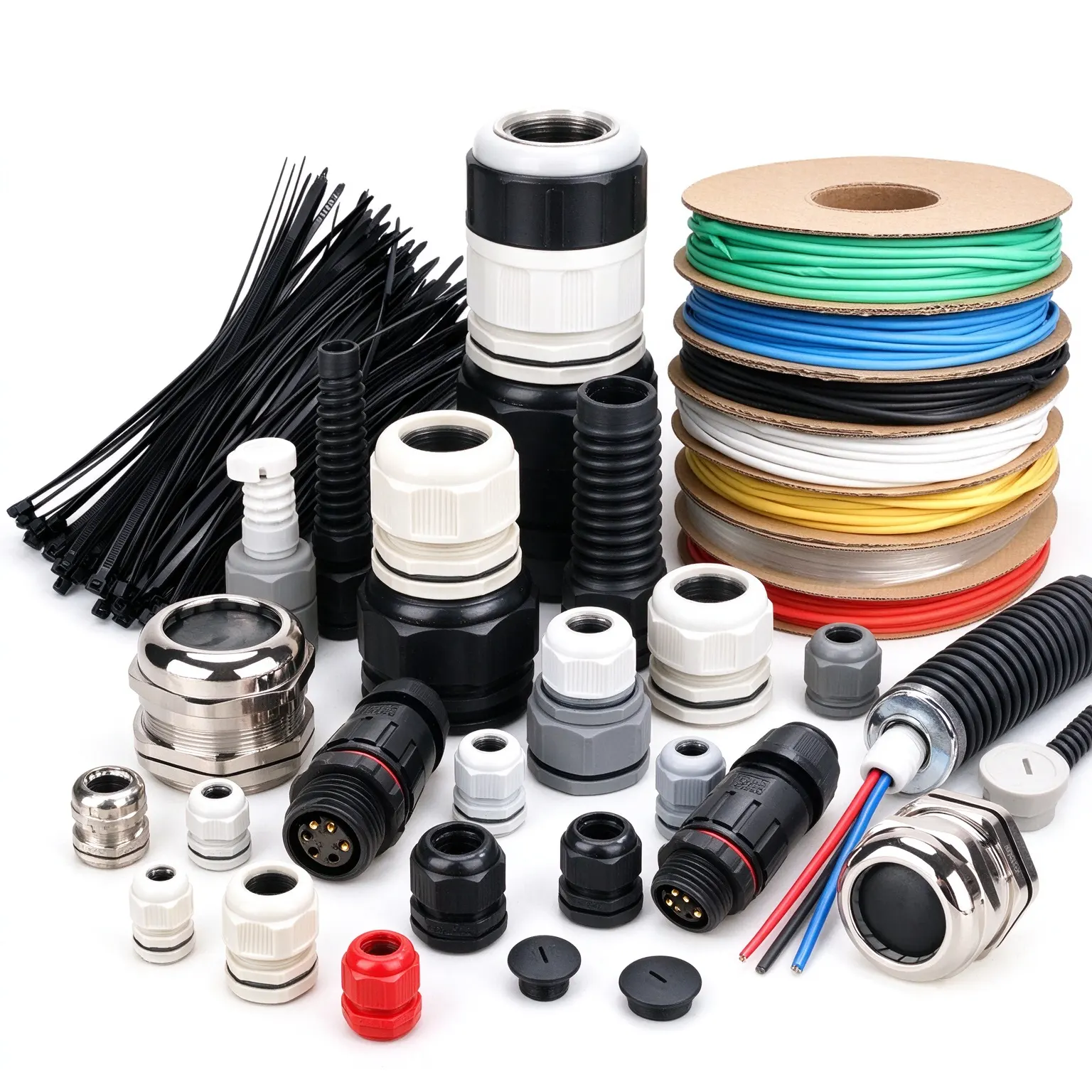
Range and variants
A gland does three things: it seals against the wall, it seals against the cable, and it clamps the cable so the terminals inside are not loaded. Skipping the third is the most common reason a gland fails in service.
Plastic glands
PA66 with a domed seal, the general-purpose choice.
Brass glands
Higher mechanical strength and EMC contact when armoured.
Multi-entry
Several cables through one entry, with a sealing insert.
What has to be specified
The values that decide whether the part fits, before price or lead time are discussed.
- Thread
- Metric M12 to M63, plus PG and NPT.
- Clamping range
- From 3 mm to 44 mm, by gland size.
- Sealing
- IP68 standard on sealed versions, IP54 on light duty.
- Material
- PA66, nickel-plated brass, or stainless steel.
- Accessories
- Locknuts, sealing washers and multi-entry inserts.
How the build is controlled
The same process controls run on every build, whether it is a prototype run or a repeat order.
IQC incoming control
Dedicated IQC staff inspect incoming materials and retain inspection records.
In-process inspection
First-article confirmation, patrol inspection, and SPC process monitoring.
MES traceability
MES covers the entire process flow, so any anomaly is located and handled fast.
8D closed-loop response
Agreed response times and internal escalation paths — clear ownership, fast resolution.
- Locked process parameters
- Crimping, soldering, molding and waterproofing run on locked parameters with defined acceptance criteria.
- Outgoing control
- OQC inspection and mix-prevention packaging standards control outbound quality.
- Compliance documents
- Certifications and test reports available on demand for compliance audits.
- Factory visits
- Book a tour and walk the production floor along our visitor route.
Where this is used
Enclosure entries
Where a cable leaves a sealed cabinet or a junction box.
Machine and outdoor equipment
IP68 entries on washdown and outdoor installations.
Strain relief
Where the cable would otherwise pull directly on the terminals.
Questions that come up before ordering
01 What are the three jobs of a gland? Function
Seal against the wall, seal against the cable, and clamp the cable so the terminals inside are not loaded. Skipping the third is the most common reason a gland fails in service.
02 How do I choose the size? Selection
By the cable diameter, not the thread. The thread is set by the enclosure hole; the clamping range has to contain the jacket.
03 Plastic or brass? Material
PA66 for general entries. Brass where mechanical strength or EMC contact on armoured cable matters.
04 Does a gland provide strain relief on its own? Installation
Only if it is tightened onto the jacket. A gland closed on the conductors, or on a cable far below its clamping range, seals nothing and holds nothing.
Need cable glands specified to your build?
Send the drawing, the environment and the interface. We confirm the open points before quoting, so the part you receive is the part that was specified.
- Drawing review before quote
- Prototype to volume
- Certifications on request