
Specified to your build · Cable Accessories
Heat-Shrink Tubing
The most common finish on a termination, and the part most often specified as "the usual" rather than by ratio.
2:1 – 4:1
Shrink ratios
90 – 135 °C
Shrink temperature
Adhesive / plain
Lining
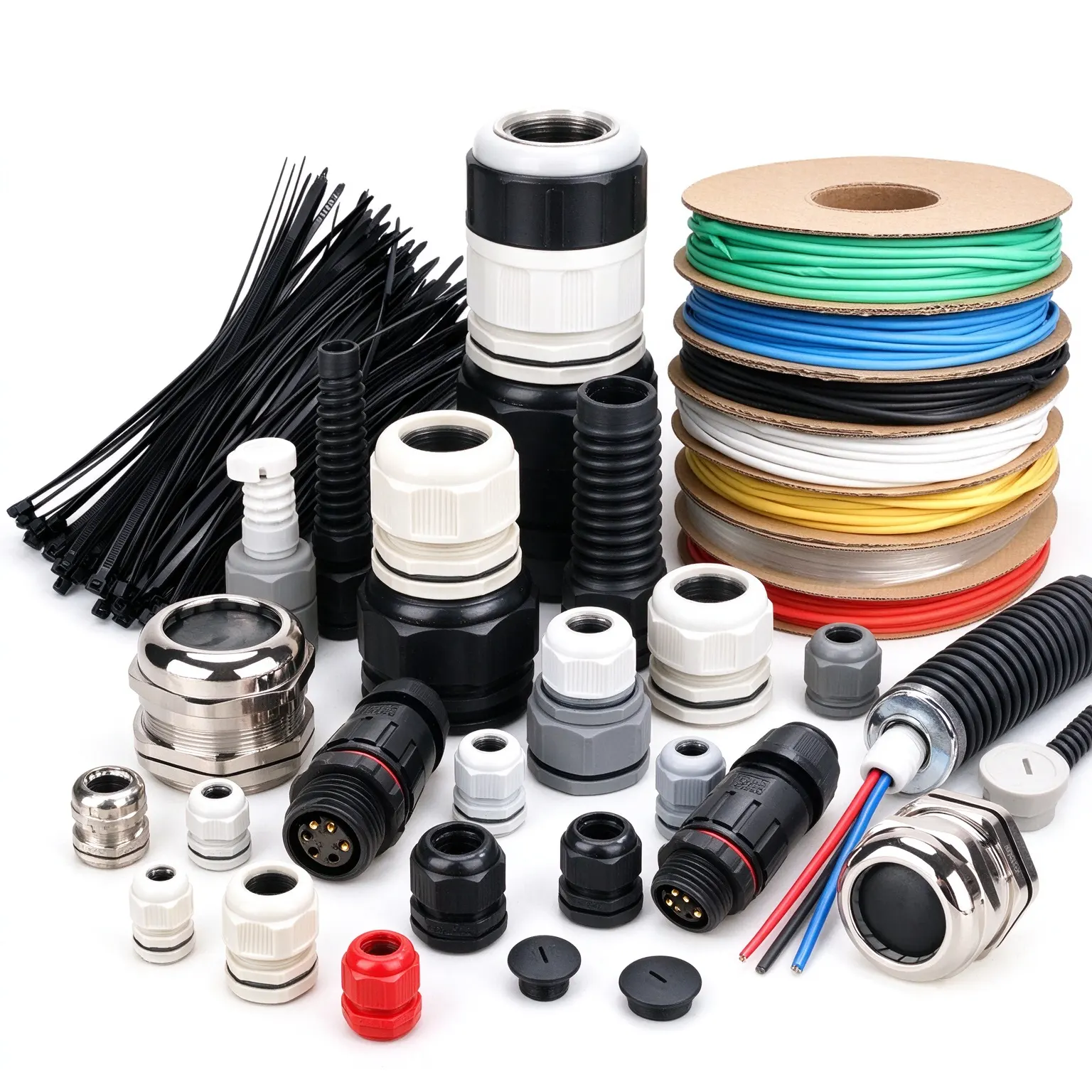
Range and variants
The ratio decides how far the tube recovers, so it decides the range of cable diameters one part number can cover. Adhesive lining adds a seal; without it the tube only covers, it does not seal.
2:1 polyolefin
The general-purpose tube for terminations and light bundling.
3:1 with adhesive
Covers a step in diameter and seals at the same time.
High-temperature
PVDF or PTFE where the joint runs above 135 °C.
What has to be specified
The values that decide whether the part fits, before price or lead time are discussed.
- Ratio
- 2:1 general purpose, 3:1 for transitions, 4:1 for large steps.
- Shrink temperature
- From 90 °C, fully recovered at 120 °C to 135 °C.
- Material
- Polyolefin standard, PVDF and PTFE for higher temperature.
- Lining
- Unlined, or adhesive-lined for a sealed joint.
- Colour
- Black standard, colour codes for identification.
How the build is controlled
The same process controls run on every build, whether it is a prototype run or a repeat order.
IQC incoming control
Dedicated IQC staff inspect incoming materials and retain inspection records.
In-process inspection
First-article confirmation, patrol inspection, and SPC process monitoring.
MES traceability
MES covers the entire process flow, so any anomaly is located and handled fast.
8D closed-loop response
Agreed response times and internal escalation paths — clear ownership, fast resolution.
- Locked process parameters
- Crimping, soldering, molding and waterproofing run on locked parameters with defined acceptance criteria.
- Outgoing control
- OQC inspection and mix-prevention packaging standards control outbound quality.
- Compliance documents
- Certifications and test reports available on demand for compliance audits.
- Factory visits
- Book a tour and walk the production floor along our visitor route.
Where this is used
Termination finishing
Covering the crimp and the first few millimetres of insulation behind it.
Bundle consolidation
Holding several conductors together at a branch point.
Sealing and strain relief
Adhesive-lined tube over a splice or a connector backshell.
Questions that come up before ordering
01 What does the ratio actually decide? Selection
How far the tube recovers, and therefore how many cable diameters one part number covers. A 2:1 tube over a large step leaves a loose sleeve.
02 Does heat-shrink seal? Sealing
Only the adhesive-lined version. Plain tube covers and strain-relieves; it does not seal the joint underneath.
03 Why does the tube split sometimes? Installation
Usually from over-shrinking on an edge, or a tube too small for the substrate. The recovered diameter has to be larger than what it covers.
04 When do I need PVDF or PTFE? Temperature
Above 135 °C. Polyolefin is the general-purpose material and stops being reliable once the joint runs hot.
Need heat-shrink tubing specified to your build?
Send the drawing, the environment and the interface. We confirm the open points before quoting, so the part you receive is the part that was specified.
- Drawing review before quote
- Prototype to volume
- Certifications on request