
Wiring built around the equipment it serves
The same harness family behaves differently in a control cabinet, a robot arm and a diagnostic tool. Start from the application to see what changes.
By application
Four application areas
Each page covers the wiring areas inside that application, the checks that decide whether an assembly holds up, and the assembly families normally used.
 01
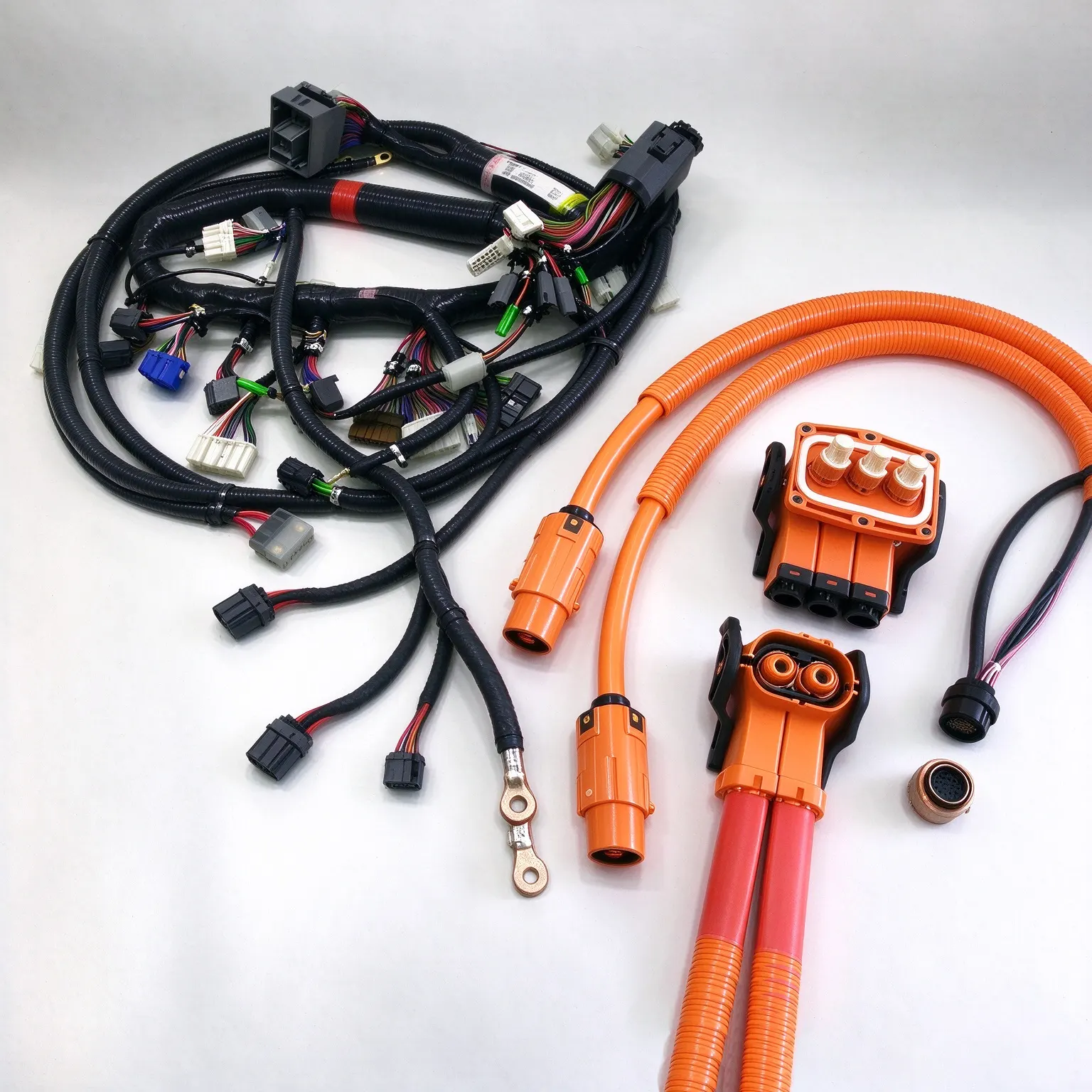
Industrial Equipment
Harnesses and cable assemblies for machine builders, panel shops and equipment manufacturers — built to the drawing, the connector schedule and the installation space inside the machine.
View application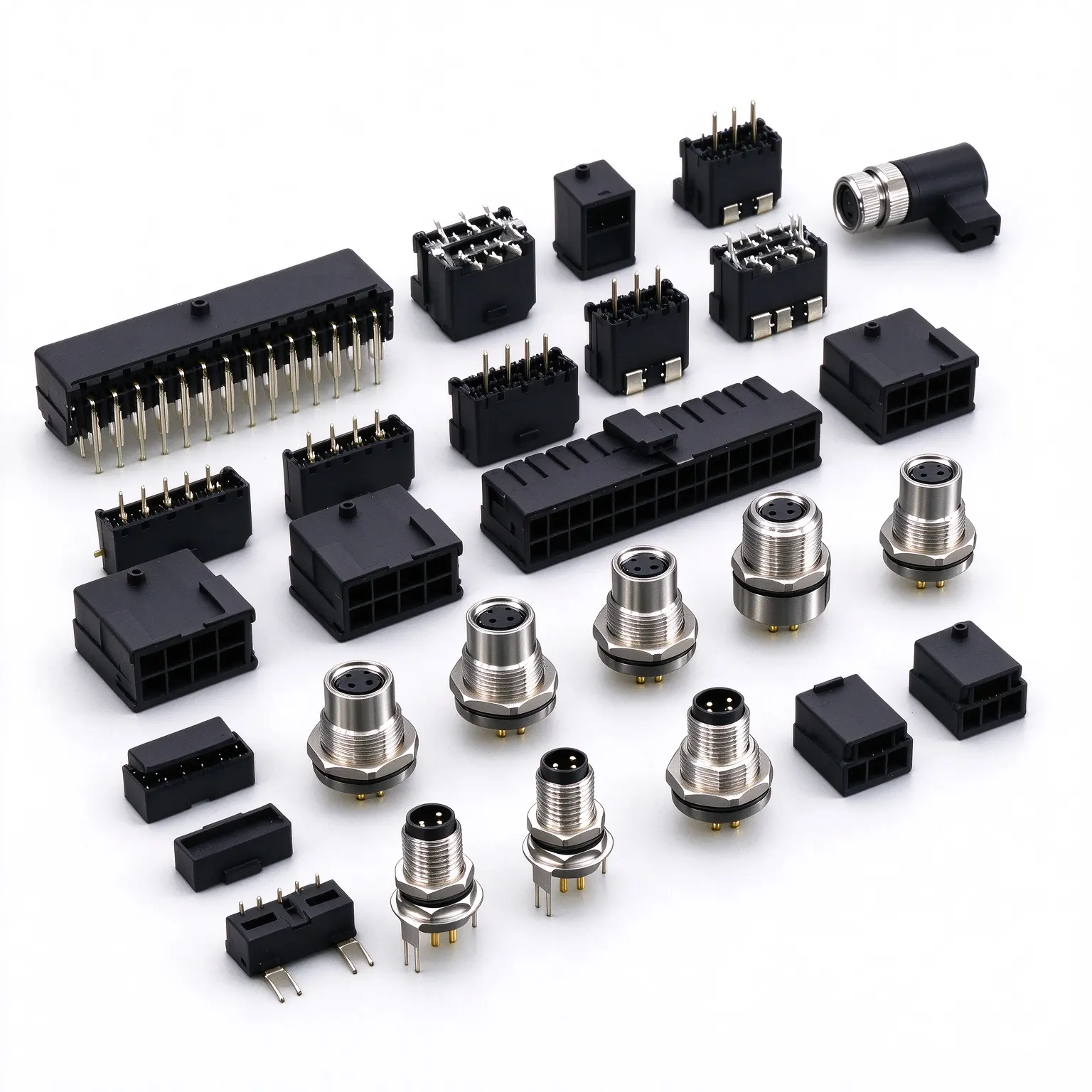 02
Industrial Automation
Sensor cordsets, actuator leads, junction assemblies and fieldbus links for automation cells — supplied in the length, pinout and jacket the cell actually needs.
View application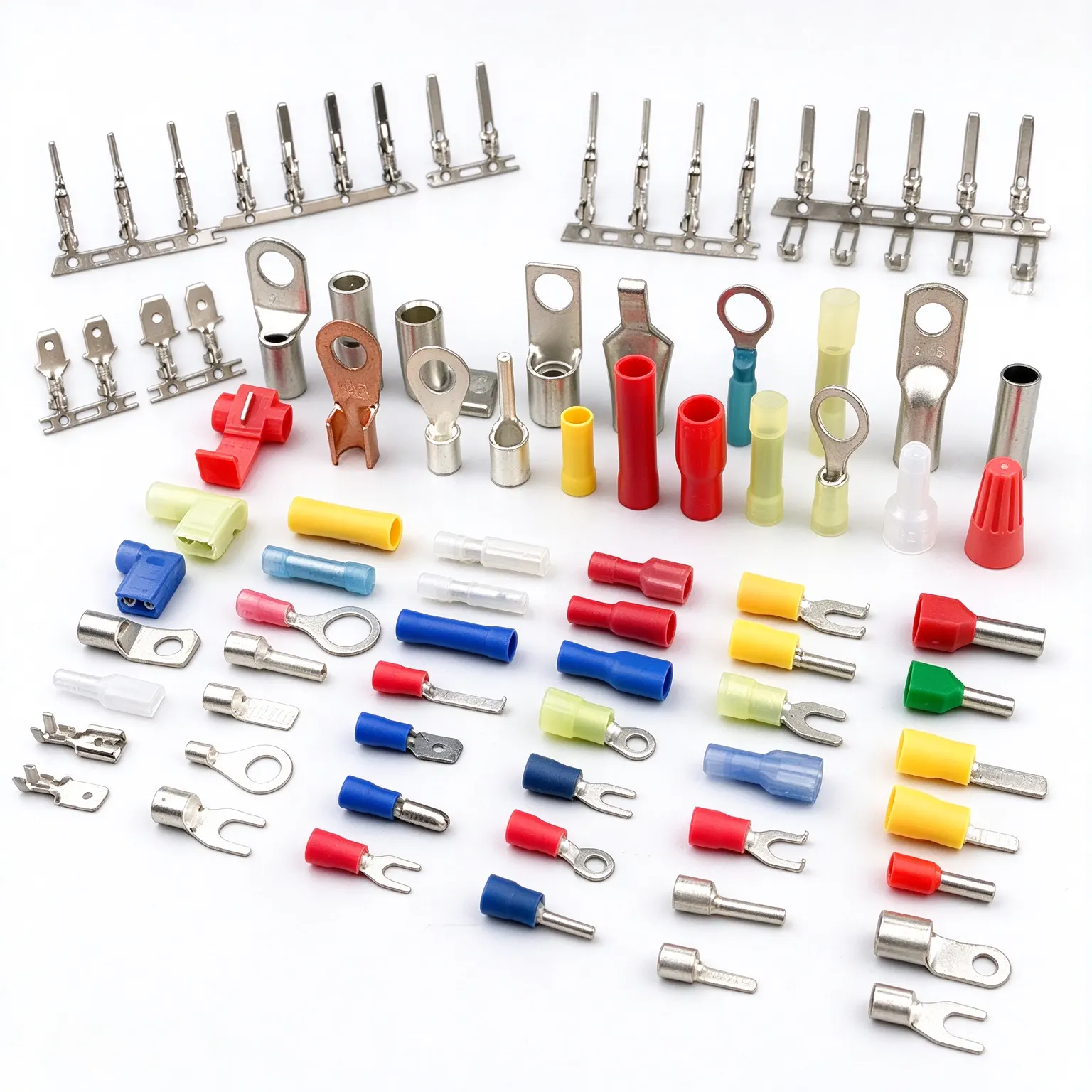 03
Automotive
Diagnostic cables, high-speed data links, sensor looms and lighting harnesses for vehicle programmes and aftermarket equipment — built to drawing, with the inspection scope agreed up front.
View application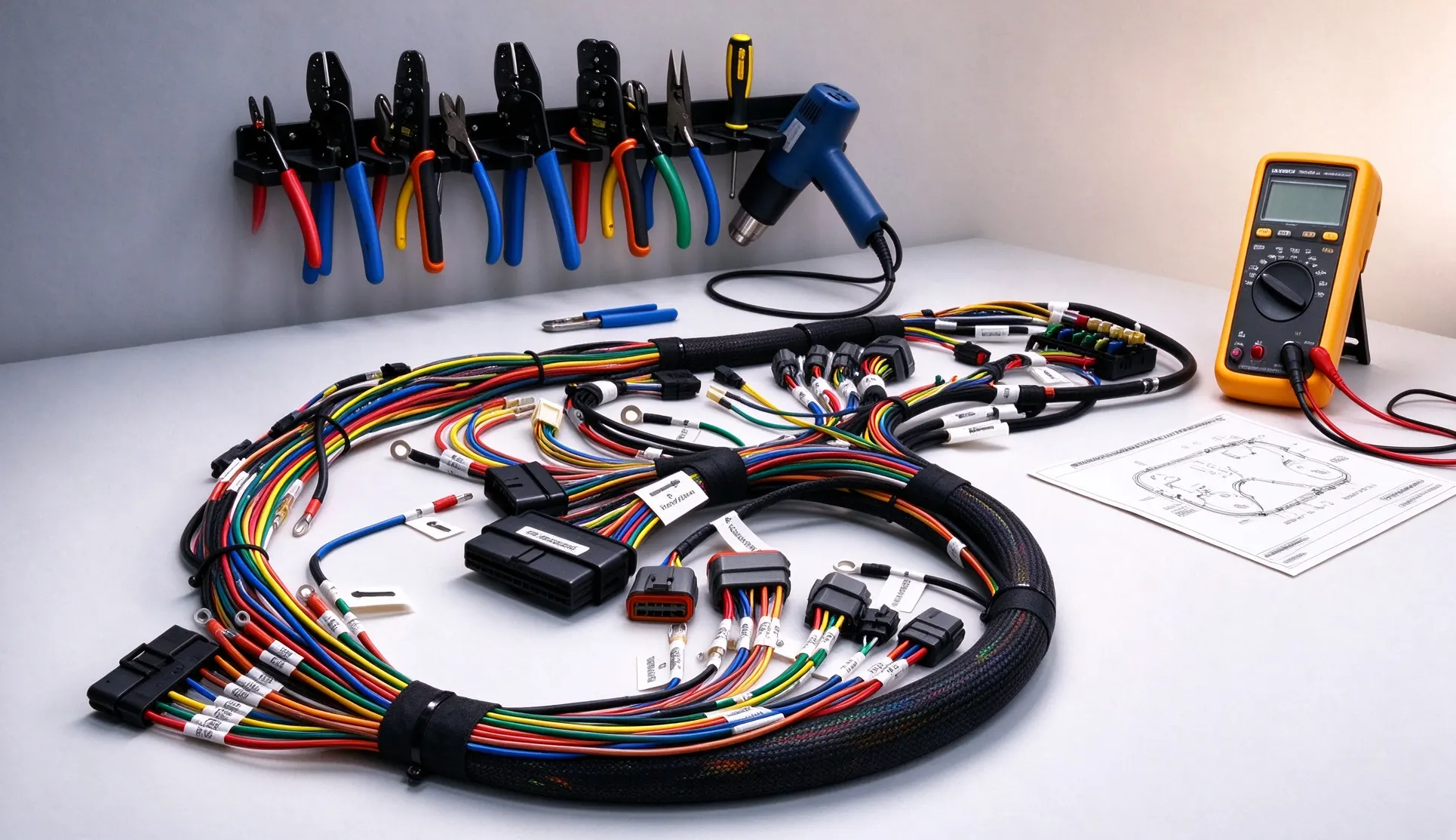 04
Medical Equipment
Internal wiring and external cable assemblies for diagnostic, laboratory and patient-adjacent equipment, where documentation and repeatability matter as much as the electrical result.
View applicationBuild the scope
What we actually build
Application pages describe the requirement. These four families describe the deliverable.
Custom wire harnesses
Multi-branch assemblies built from customer drawings, BOMs or existing samples — the option when no standard family fits the installation.
Wire harness servicesCable assemblies
Circular, data and power families produced in the length, pinout and jacket the project defines — M8 through M16, Ethernet, OBD, LVDS, HSD and more.
Compare cable familiesConnectors & terminals
Housings, contacts, splices and accessories specified by manufacturer and part number, matched to the wire and the interface.
Connector overviewWires & cables
Single conductors, multi-core cables and jacket options specified by gauge, insulation class and environmental exposure.
Wire and cable optionsWhere to start
Not sure which page applies?
Most projects start from one of these three positions. Pick the one that matches what you already have.
You have a drawing
Send the harness drawing, the connector schedule and the test scope. That is enough to review feasibility and quote.
Send the drawing 02You have a sample
A photo and the connector part numbers are usually enough to identify the family and the open questions.
Identify the connector 03You are still sizing
Check the conductor against the current and the run length before the harness drawing is fixed.
Run the calculatorTell us what the equipment has to do
Send the drawing, the connector schedule or a photo of the existing assembly. We review what you have and come back with the open points and a quotation path.