Hello everyone, I am a waterproof wiring harness. Today, I want to speak up for countless devices that have shut down due to water ingress failures.
Over the years, I have been paired with various devices, working in outdoor construction sites, smart farms, new energy systems, and automated workshops. I have witnessed too many devices failing prematurely.
When engineers troubleshoot equipment failures, they always suspect issues with controllers, sensors, or motors. But in most cases, the real culprit lies not with the core equipment, but with a large number of substandard wiring harnesses that wear a “waterproof” appearance without delivering genuine waterproof performance.
Identical in Appearance, Worlds Apart in Quality
Most people believe that any connector marked IP67 or IP68 is fully protected against rain, moisture, and dust.
It is widely assumed that installing such wiring harnesses on outdoor equipment, industrial machinery, or new energy systems guarantees long-term stability. However, this is far from the truth. Many so-called “waterproof harnesses” look exactly the same as qualified products, featuring identical waterproof connector shells, rubber seals, and high IP rating labels.
But once you remove the outer shell, the gap becomes obvious. The waterproof performance of most low-cost products is only skin-deep. Manufacturers simply assemble standard waterproof connectors without performing potting, filling, or sealing in critical areas such as crimp terminals, wire joints, and internal cavity gaps.
These tiny invisible gaps act as hidden entry points for moisture. The equipment works perfectly in the first month, half a year, or even longer after installation. But under continuous rain erosion, high humidity, high-pressure washing, and day-night temperature cycling, moisture gradually penetrates and accumulates inside the harness.
This slow invasion causes terminal oxidation, rising contact resistance, and drifting signal accuracy. Eventually, the equipment shuts down suddenly — long after the hidden failure has been lurking undetected.
Two Hidden Industry Loopholes That Ruin Engineering Projects
In the waterproof wiring harness industry, two cost-cutting practices have become unspoken norms that trigger endless equipment failures.
1. Inferior sealing materials lead to premature equipment failure
Most people mistakenly believe waterproofing relies on the outer shell. In fact, the service life of a waterproof harness depends entirely on its internal sealing system — sealing rings, waterproof glue, and potting materials form the first line of defense against moisture.
To cut costs, many manufacturers adopt ordinary rubber rings and low-grade sealing glue. These materials look intact when new, but quickly harden, age, crack, and peel when exposed to harsh environments: summer high-temperature exposure, winter freezing, coastal salt spray, and industrial oil pollution.
Once the sealing system fails, moisture seeps into the harness interior, causing terminal oxidation, short circuits, signal failure, and frequent equipment rework.
2. No professional testing before delivery
Genuine waterproof defects are almost invisible to the naked eye. A micron-level gap, minor crimp deviation, or uneven potting can all become fatal hidden hazards.
Unfortunately, most low-cost harnesses skip complete performance verification. No air tightness testing, no salt spray testing, no high and low temperature cycle testing, and only random visual inspection is conducted before packaging and shipping.
Simply put, customers pay for products while unintentionally acting as on-site testers. After large-scale installation, hidden problems break out in batches, resulting in project delays, equipment downtime, and soaring rework costs — all borne by the project side.
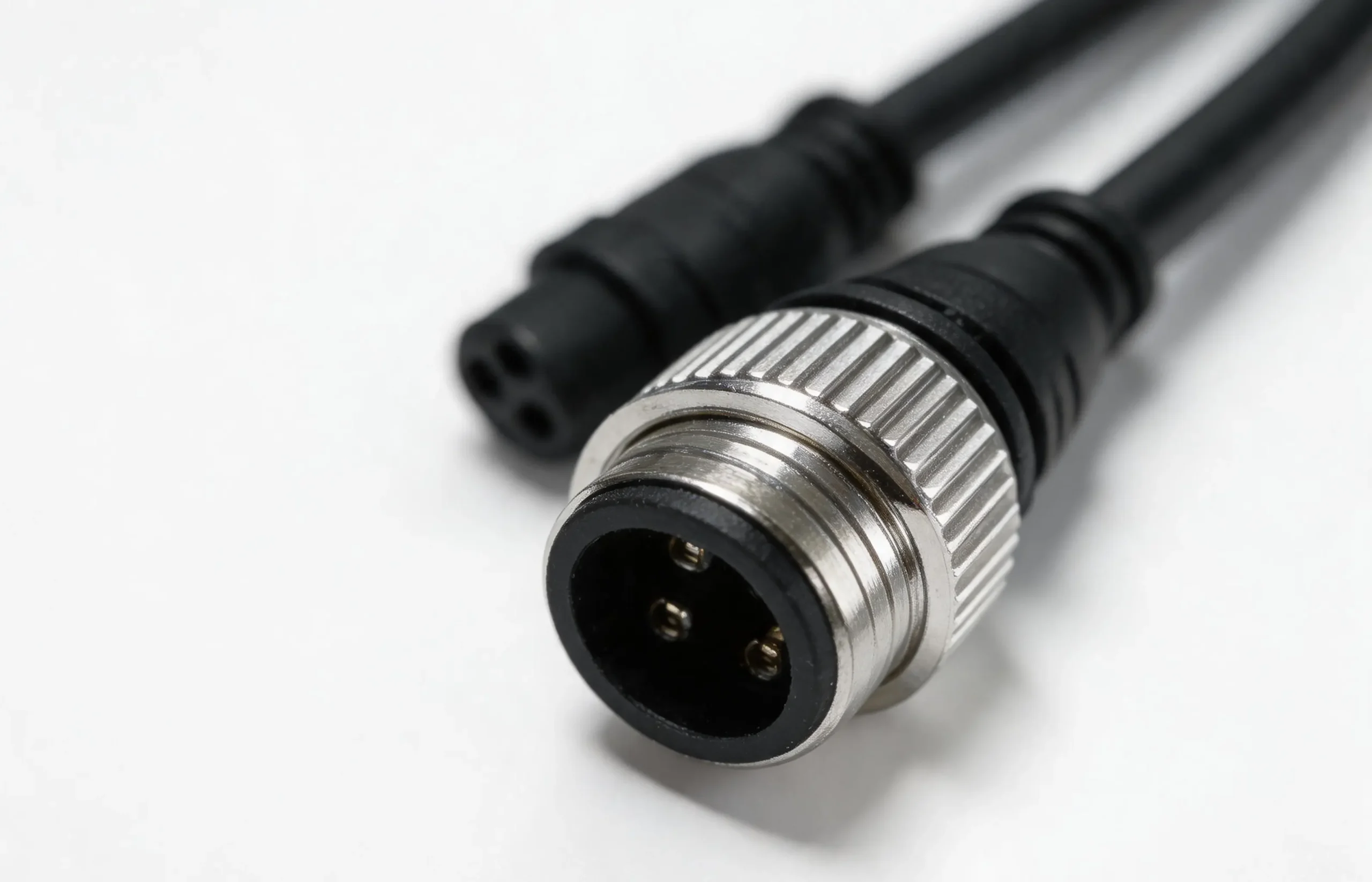
My Protection Starts From the Inside
I never rely on my outer shell for protection. During production, all terminal crimping areas, wire branch nodes, and connector internal cavities receive double-layer sealing treatment and overall potting filling tailored to different application scenarios.
Every possible water seepage point is completely sealed off. Moisture, dust, and oil contamination cannot enter the interior. Even under long-term heavy rain erosion, high-pressure washing, and humid environments, I consistently maintain a dry and stable internal circuit structure.
My Materials Stand the Test of Time
Every component of me is carefully selected: industrial-grade weather-resistant housing, high-quality silicone or fluororubber seals, high-purity tinned copper conductors, and wear-resistant oil-proof sheath materials.
These practical configurations enable stable performance in high temperature, low temperature, salt spray, ultraviolet radiation, and oily industrial environments. True reliability is not about looking perfect when newly manufactured, but maintaining stable operation for years.
Every Batch of Mine Undergoes Rigorous Testing Before Delivery
In my definition, “looking fine” never means “truly qualified”. Therefore, every finished harness undergoes strict verification: 100% air tightness testing, IP rating verification, salt spray corrosion testing, high and low temperature cycle testing, electrical performance testing, and dimensional and assembly inspection.
Any product with sealing defects or assembly deviations is directly eliminated. Because genuine industrial-grade quality is never guaranteed by chance.
Stop Blindly Trusting IP Labels
Many purchasers and engineers fall into a common misunderstanding: judging quality solely by IP rating. In fact, an IP rating is only a test result, not a reflection of production craftsmanship.
Without reliable structural design, mature sealing techniques, high-quality weather-resistant materials, and strict quality verification, even the highest IP rating is nothing more than a number on paper.
Truly excellent waterproof wiring harnesses do not focus on showing off parameters. They focus on long-term stability: reliable operation after three years of service, stable performance in extreme environments, and minimal rework after project delivery.
For engineering projects, long-term stability is far more valuable than fancy data. Whether used on automotive chassis and high-temperature engine compartments, industrial automation equipment, or outdoor and marine long-term operating systems, only harnesses that can withstand the test of time and harsh environments qualify as genuine industrial-grade waterproof harnesses.
Conclusion
I am a waterproof wiring harness. I know cheaper products will always exist in the market, but I also know that genuine long-term equipment protection never comes from the lowest price — it comes from solid craftsmanship, reliable materials, and strict quality standards.
I may be a tiny and inconspicuous component in an electrical system, but my failure can shut down the entire device. Therefore, next time you select a waterproof wiring harness, look beyond the IP label. Pay attention to every detail that determines equipment service life.
Genuine waterproof performance is never advertised in words. It is proven through every wind and rain, and every long-term test of time.
Marco Lee serves as a specialist at Hank Custom Wire Harness with profound expertise in custom wiring harness and cable assembly solutions.
With more than a decade of hands-on experience in the electronics industry, Marco focuses on custom automotive, OBD and waterproof cable development. All technical articles on this blog originate from real customer consulting, project experience and daily technical problems encountered in harness customization.
Marco regularly follows industry publications such as Wiring Harness News to keep updated on the latest technology and practical solutions for wiring production.
Beyond daily technical work and industry learning, he shares practical harness knowledge via blog posts to help global purchasers solve problems about connector selection, cable specification and customized wiring matching.