Hello, I’m an OBD Wiring Harness
If you’ve never really noticed me before, I don’t blame you.
In a vehicle, I’m not the exciting part. I don’t generate horsepower, I don’t control acceleration, and I don’t show up in glossy car brochures. I usually live deep behind the dashboard, quietly sitting between plastic panels, metal brackets, and other cable assemblies.
Most drivers only “meet” me when something goes wrong.
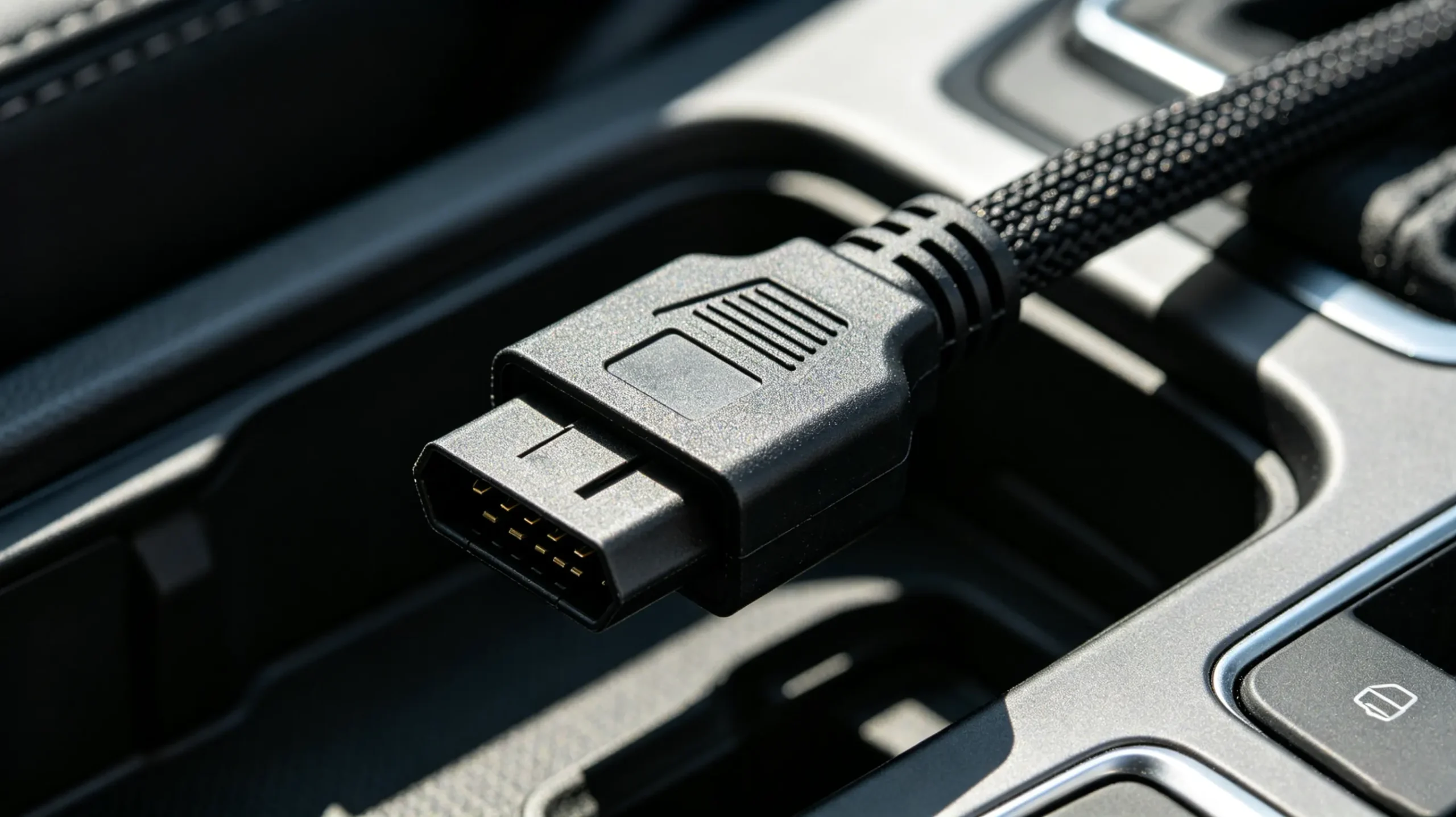
The check engine light turns on. A technician plugs a diagnostic scanner into the OBD port. A few seconds later, fault codes and live data appear on the screen.
It looks like magic.
But from my perspective, it’s not magic at all.
It’s communication—and I’m the one carrying every message.
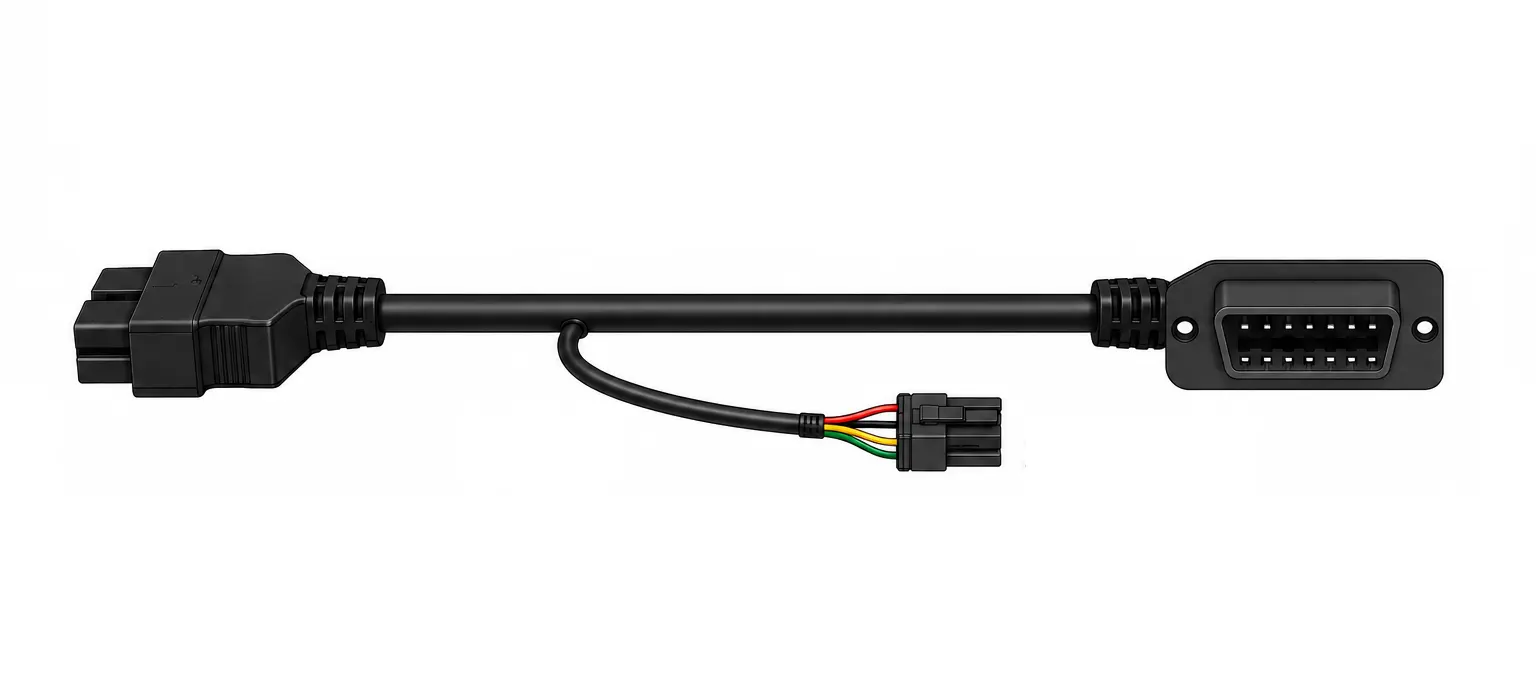
I’m an OBD wiring harness, and my job is simple: I make sure the vehicle can talk to the outside world without losing its voice in the middle.
If the vehicle is a body, I’m the nervous system. If you prefer engineering terms, I’m the physical data pathway between internal control units and external diagnostic tools.
My Family Story: OBD and OBD2 as a Language Evolution
People often ask me what the difference is between OBD and OBD2.
The easiest way to understand it is not technical—it’s historical.
OBD feels like my “older generation.”
In the early days of automotive diagnostics, each manufacturer had its own system. Different connectors, different protocols, different fault definitions. Every vehicle brand spoke its own language, and technicians had to constantly switch “dialects” depending on the car they were working on.
Diagnostics were powerful, but fragmented.
Then OBD2 arrived.
Instead of every manufacturer speaking differently, the industry agreed on a shared standard. The connector layout became unified, communication rules were standardized, and diagnostic trouble codes became consistent across vehicles.
For the first time, vehicles could be understood using a common language.
And I was built for that world.
So, in simple terms, OBD is the early experimental generation, OBD2 is the standardized system, and I am the modern wiring harness designed to carry OBD2 communication reliably.
My Real Job: Moving Data, Not Just Power
A lot of people think I’m just a bundle of wires.
In reality, I’m closer to a controlled data highway inside a moving machine.
Modern vehicles are full of electronic control units. The engine controller manages combustion, the ABS manages braking stability, the transmission controls shifting logic, and the instrument cluster displays information to the driver.
All of these systems constantly exchange data.
If the vehicle is a city, these modules are government departments. I’m the infrastructure that allows information to move between them and the outside world.
When a diagnostic tool connects, it doesn’t “read magic data” from the car. It sends a request, and I carry that request into the vehicle systems—and bring the response back out again.
Without me, the data still exists inside the vehicle. It simply has no path to leave.
ECU: The Brain I Talk to Every Day
The ECU is one of my closest partners.
It acts as the vehicle’s brain, continuously monitoring engine temperature, fuel injection timing, oxygen sensor feedback, voltage levels, and emission behavior.
It doesn’t “sleep.”
When something abnormal happens, the ECU generates diagnostic information—what people usually call trouble codes.
But that information doesn’t travel on its own.
It needs a pathway to reach the outside world.
That’s where I come in.
In system terms, the ECU handles decision-making, while I handle data transmission. It thinks, I deliver.
CAN Bus: The Vehicle’s Internal Group Chat
Inside the vehicle, communication is constant.
The engine module sends torque information. The transmission system adjusts shifting behavior based on load. The ABS module shares wheel speed data. The instrument cluster updates what the driver sees in real time.
This entire ecosystem is built on CAN Bus communication.
The easiest way to understand CAN Bus is to imagine a company group chat where every department is actively posting updates.
Everyone sees the same information almost instantly.
I sit at the edge of this system, acting as the external gateway that allows diagnostic tools and telematics devices to tap into that internal conversation.
Why “No Connection” Problems Happen So Often
One of the most common phrases I hear in workshops is: “The scanner can’t connect to the vehicle.”
In many cases, the first assumption is that the diagnostic tool is faulty. But in real-world troubleshooting, the problem is often physical rather than digital.
Connector pins may be slightly oxidized. The harness may have been stressed by repeated vibration. A small contact issue may exist that doesn’t fully break the connection but weakens the signal.
These are the kinds of problems that are invisible at first glance but very real in behavior.
From an engineering perspective, these are physical layer issues—not software failures.
From Service Tool to Always-On Data Path
In the past, my life was simple.
I was only used during maintenance. A technician would connect a scanner, read the data, fix the issue, and disconnect me again.
Today, that world no longer exists.
Modern vehicles are constantly connected to external systems—fleet management platforms, GPS tracking devices, insurance monitoring units, and remote diagnostic tools.
This means I’m no longer a temporary tool.
I’m an always-on communication path.
The moment the vehicle starts, data starts flowing.
Why Custom Solutions Matter More Than People Think
No two vehicle applications are the same.
Some systems require long cable runs. Others need multiple device connections. Some operate in high-vibration environments, while others must survive extreme heat or moisture.
A standard solution may work, but it rarely works perfectly.
That’s why custom OBD wiring harness designs exist.
In real engineering work, customization is not about complexity—it’s about reliability. The goal is to ensure that communication remains stable under real operating conditions, not just in ideal environments.
My Future: Still Quiet, But More Important Than Ever
Vehicles are becoming more intelligent every year.
Electric vehicles, connected platforms, autonomous driving systems, and cloud-based diagnostics are all increasing the amount of data being generated inside cars.
But no matter how advanced vehicles become, one principle never changes:
Data must move through something physical.
And as long as information needs a path, I will remain part of the system.
I may stay invisible, but I will not become irrelevant.
FAQ: Real Engineering Questions From the Field
Q1: Is an OBD wiring harness the same as an OBD2 wiring harness?
In most modern automotive applications, yes. OBD2 is the standardized system used in almost all current vehicles, so the term usually refers to OBD2-based wiring harnesses.
Q2: What is the main function of an OBD wiring harness?
It provides a physical communication path between the vehicle’s ECU and external diagnostic or telematics devices, enabling data exchange and system diagnostics.
Q3: Why does a scanner sometimes fail to connect to a vehicle?
The issue is often physical: poor connector contact, oxidation on pins, or internal wiring fatigue rather than a failure of the diagnostic tool or ECU.
Q4: Does an OBD wiring harness affect vehicle performance?
Not directly. However, if the harness fails, diagnostic systems or connected devices may not function properly.
Q5: How is CAN Bus related to an OBD wiring harness?
CAN Bus is the internal communication network inside the vehicle, while the OBD wiring harness provides external access to that network.
Q6: Why are custom OBD wiring harnesses used?
Different vehicles and applications require different lengths, connectors, shielding levels, and environmental resistance requirements.
Q7: Are OBD wiring harnesses used in electric vehicles?
Yes. EVs still rely on diagnostic systems and communication networks for battery management, control systems, and diagnostics.
Q8: What is the most common failure point in an OBD wiring harness?
Connector wear and contact degradation due to repeated use, vibration, or environmental exposure are the most common issues.
Marco Lee serves as a specialist at Hank Custom Wire Harness with profound expertise in custom wiring harness and cable assembly solutions.
With more than a decade of hands-on experience in the electronics industry, Marco focuses on custom automotive, OBD and waterproof cable development. All technical articles on this blog originate from real customer consulting, project experience and daily technical problems encountered in harness customization.
Marco regularly follows industry publications such as Wiring Harness News to keep updated on the latest technology and practical solutions for wiring production.
Beyond daily technical work and industry learning, he shares practical harness knowledge via blog posts to help global purchasers solve problems about connector selection, cable specification and customized wiring matching.